Retro-Modern Architecture Tour ~from mid-19th to late 20th Era~ (Kanazawa Architecture Tourism Model Course No.4)
This course explores representative Western-style architecture from Kanazawa’s modern era, allowing visitors to experience the culture and atmosphere of the Meiji (1868–1912), Taisho (1912–1926), and early Showa (1926–1989) periods.
Get off at “Korinbo” bus stop
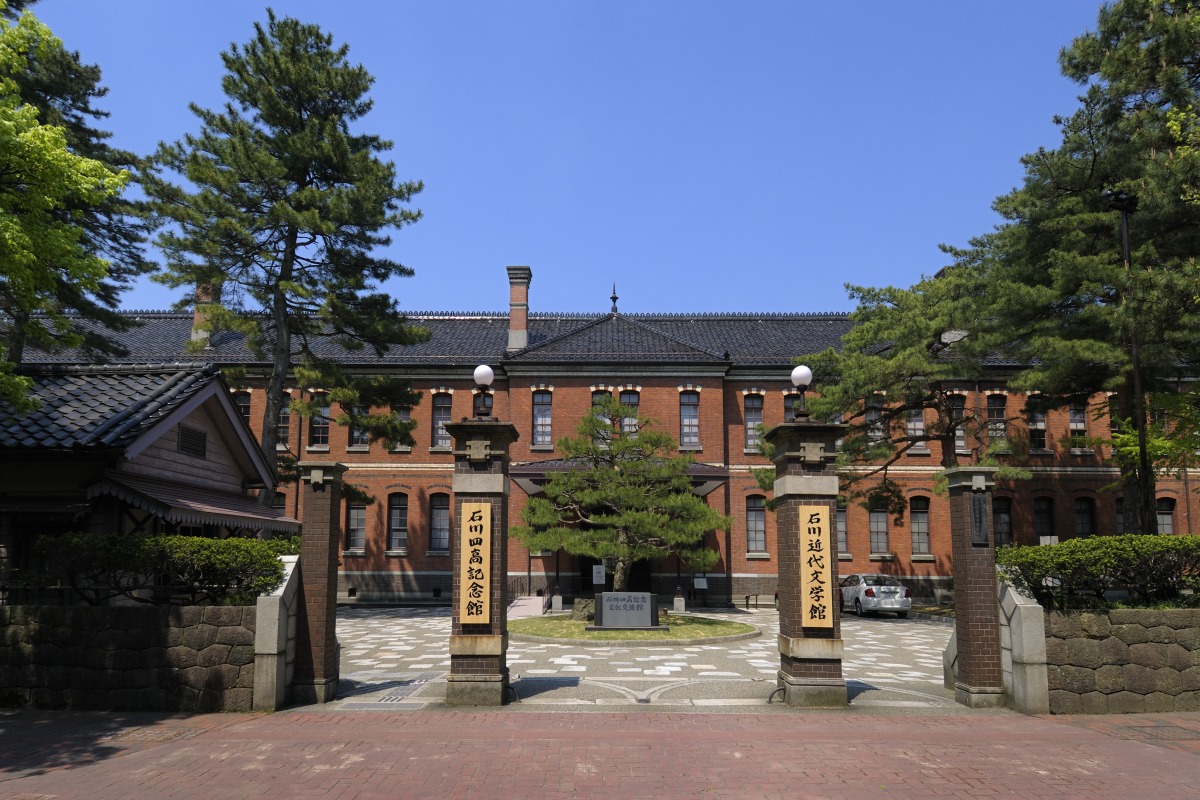
The Fourth High School Memorial Park, Ishikawa
A red-brick school building that symbolizes Kanazawa as a “City of Learning,” which has produced many distinguished individuals.
Originally the Fourth Higher School (established under the old education system), this red-brick building was constructed in 1891 and is designated as a National Important Cultural Property.
Its dignified and solid brick architecture reflects the strong ambitions of the Meiji government. Inside, exhibitions look back on the school’s history, and a restored classroom recreates the nostalgic academic atmosphere of the time.
◆Completed: 1891 (Meiji 24)
◆Designed by: Ministry of Education engineers, Yamaguchi Hanroku and KUME Masamichi
◆Designated as a National Important Cultural Property of Japan

Owaricho Chomin(Citizens') Culture Museum
Originally constructed in 1907 as the Kanazawa Savings Bank, this building presents an intriguing blend of Japanese and Western design.
The exterior features a traditional black-plastered storehouse style with a tiled roof, while the interior retains Western-style banking spaces. Highlights include the original teller counters and the former director’s office. The building is designated as a Tangible Cultural Property of Ishikawa Prefecture.
◆Completed: 1907 (Meiji 40)
◆Original Facility: Bank building
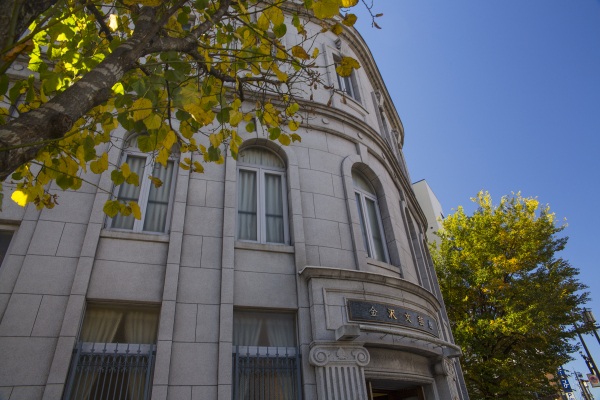
Kanazawa Literary Hall
Originally built in 1929 as a bank, this building features a distinctive curved façade that has been familiar to citizens since before World War II.
Now serving as a literary hub, it displays valuable materials including handwritten manuscripts by author Hiroyuki Itsuki. The former vault has been creatively repurposed as a mini gallery. The building is registered as a Tangible Cultural Property.
◆Completed: 1929 (Shōwa 4)
◆Original Facility: Bank building
◆Registered Tangible Cultural Property of Japan
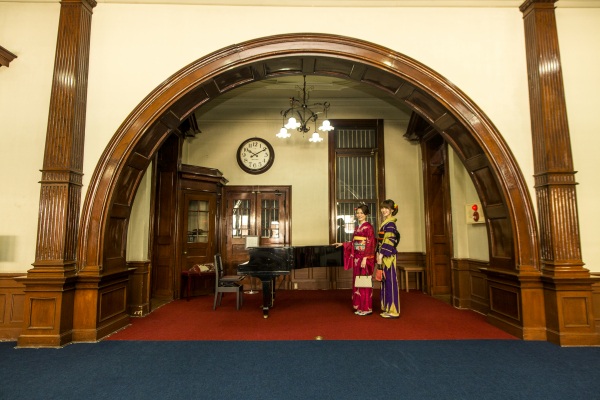
Kanazawa Folklore Museum
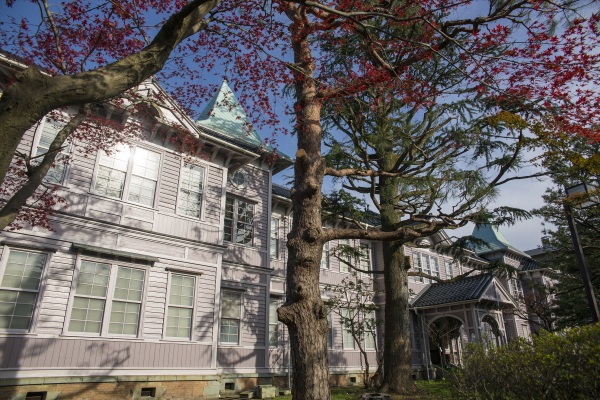
A Western-style wooden building affectionately known as the “Three-Spire Schoolhouse.”
Built in 1899 as a junior high school, this wooden Western-style building is designated as a National Important Cultural Property.
Highlights include its complex rooflines, carriage porch entrance, sash windows, and hanging lamps — fine examples of Meiji-era Western-influenced wooden school architecture.
◆Completed: 1899 (Meiji 32)
◆Designed : by Ishikawa Prefecture engineer YAMAGUCHI Kokichi
◆Original Facility: Main building of the former Ishikawa Prefectural Second Junior High School
◆Designated as a National Important Cultural Property of Japan
Get off at Hashibacho” bus stop
Hokuriku Gakuin Winn Residence(outside only)
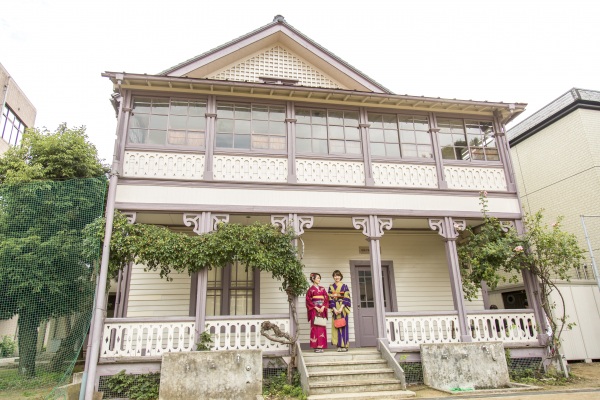
The only surviving Western-style residence from the Meiji period in Kanazawa.
Built in 1888 as the residence of American missionary Thomas Winn, who helped establish Kanazawa Girls’ School (now Hokuriku Gakuin).
The authentic American Colonial-style design evokes the atmosphere of the American frontier.
◆Completed: 1888 (Meiji 21)
◆Designed : by American missionary , Thomas Winn
◆Use: Mission house; residence for the Win family and other missionary families; also served as an orphanage
Ishikawa Prefectural Museum of History
A former arsenal warehouse of the Army, built in the early 20th century.
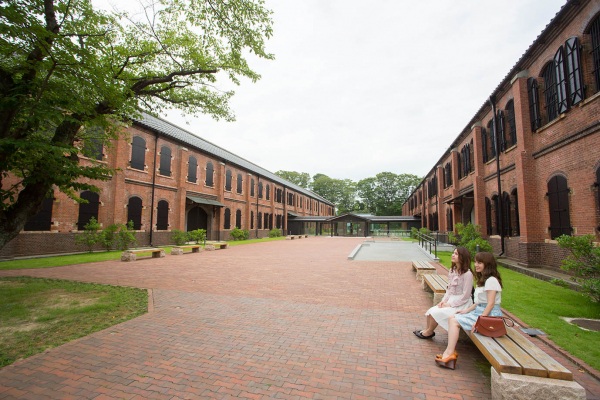
This interactive museum introduces Ishikawa’s history and folk culture. The three red-brick buildings were constructed between 1909 and 1914 as army arsenals and are designated National Important Cultural Properties.
Though functional warehouse structures with minimal ornamentation, their rhythmic brick design creates a refined architectural presence.
◆Completed: Building No. 1 (roadside): 1914 (Taishō 3)
Building No. 2: 1913 (Taishō 2)
Building No. 3: 1909 (Meiji 42)
◆Former Facility: Weapons warehouses of the Japanese Army
◆Designated as a National Important Cultural Property of Japan
National Crafts Museum
Opened in 2020 after relocating from Tokyo, this is Japan’s only national museum dedicated exclusively to crafts and the first national art museum on the Sea of Japan side.
The two buildings were originally military facilities: the former 9th Division Headquarters (1898) and the former Kanazawa Officers’ Club (1909). Both are registered Tangible Cultural Properties, featuring ornate decorations influenced by Baroque and other classical styles.
◆ Completed: 1898 (Meiji 31)
◆ Former Facilities: Headquarters Building of the former 9th Division of the Japanese Army; former Kanazawa Kaikōsha (Officers’ Club) of the Army
◆ Registered Tangible Cultural Property of Japan

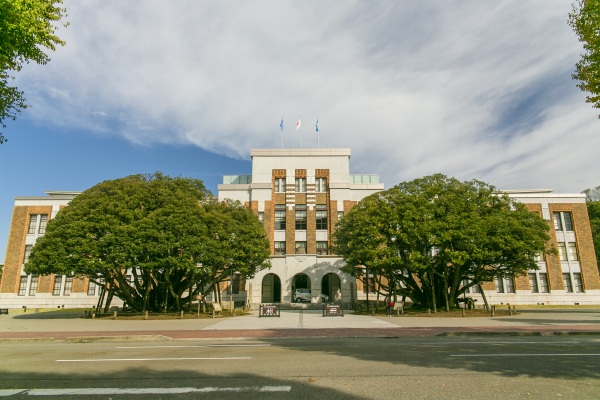
Shiinoki Cultural Complex, Ishikawa Prefecture
Its appeal lies in the then cutting-edge scratch tiles and striking geometric design.
Originally Kanazawa’s first reinforced concrete prefectural office building, this structure was renovated and reopened in 2010 as a cultural exchange facility.
The preserved 1924 Taisho-era tiled façade contrasts beautifully with the modern glass wall at the rear. Two majestic chinquapin trees in front are designated National Natural Monuments.
◆ Completed: 1924 (Taishō 13)
◆ Designed by: Ministry of Finance architect, YABASHI Kenkichi