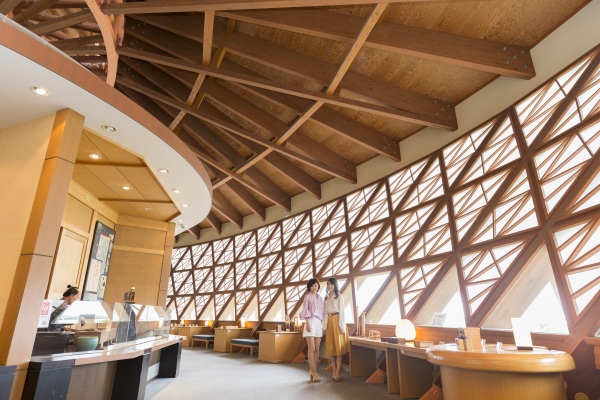
Modern Architecture Tour ~Visiting Masterpieces by Renowned Architects~ (Kanazawa Architecture Tourism Model Course No.3)
Kanazawa is home to numerous works by some of Japan’s most celebrated architects, many of which are internationally recognized. This course takes you on a journey to explore outstanding examples of modern architecture across the city.
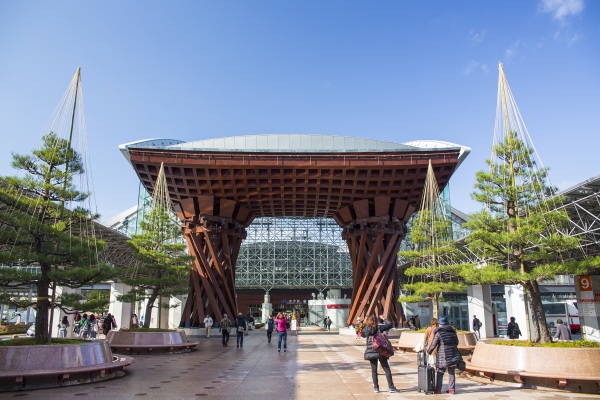
Kanazawa Station Motenashi Dome and Tsuzumi Gate
At the gateway to Kanazawa stands the striking combination of a glass-and-aluminum dome and a monumental wooden gate inspired by the traditional tsuzumi drum used in Noh theater and traditional performing arts.
Selected as one of the “14 Most Beautiful Train Stations in the World” (2011, Travel + Leisure web edition), this landmark welcomes visitors with both modern engineering and traditional artistry.
◆Completed: 2005
◆Designed : by SHIRAE Ryūzō (Shirae Architectural Studio)
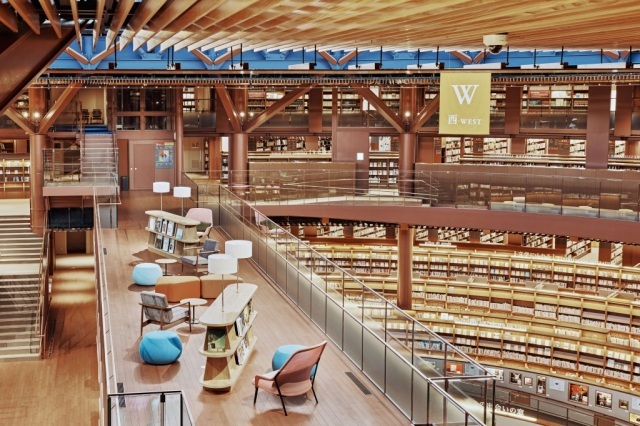
Ishikawa Prefectural Library
A space to enjoy discovering books
Since its opening in July 2022, the library has welcomed over one million visitors in less than a year, making it the most-visited prefectural library in Japan.
The first thing that overwhelms visitors is the massive circular atrium that spans four floors. The bookshelves are arranged in a stepped, terraced layout, which, despite the vast open space, remarkably avoids any sense of oppression.
The circular-based structure naturally guides visitors around the library, creating a walking-like circulation that makes exploring for books an enjoyable experience in itself.
Scattered throughout the library are 500 designer chairs, giving visitors the freedom to choose their own space, effectively dispelling the sense of confinement often associated with public facilities.
◆Completed : 2022
◆Designed : by Mitsuru Senda, Kankyō Design Institute Co., Ltd.
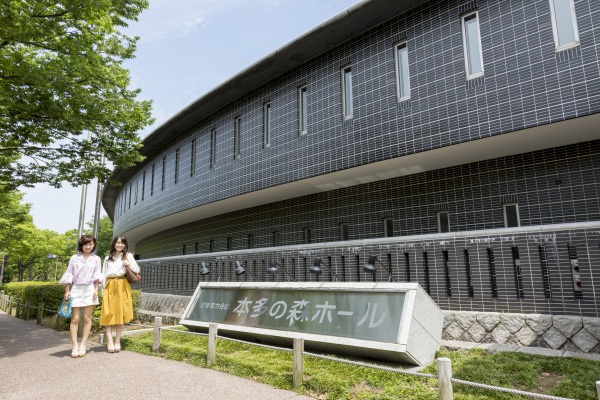
Hondanomori Hokuden Hall
Designed by architect KUROKAWA Kisho.
Originally built in 1977 as a welfare pension hall, the building later became owned by Hokuriku Electric Power Company and reopened in 2009 under a new name (renamed in 2023 to its current name).
The design incorporates elements inspired by traditional Kanazawa townhouses and waterways. Its subdued gray “Rikyu-nezumi” tone gives the structure a rare calm presence among Kurokawa’s works.
◆Completed: 1977
◆Designed : by KUROLAWA Kisho(architect)
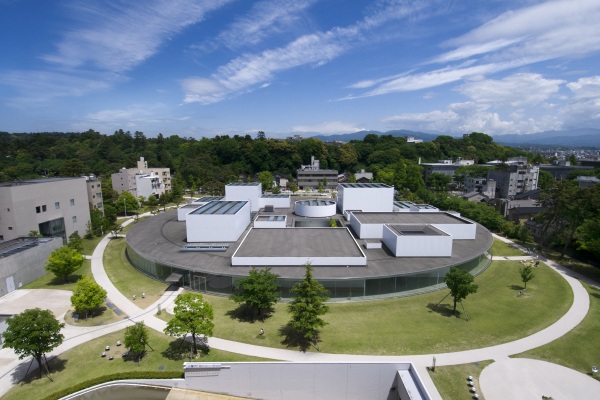
21st Century Museum of Contemporary Art, Kanazawa
Designed by SANAA (Kazuyo Sejima + Ryue Nishizawa), recipients of the 2010 Pritzker Prize. This museum is one of their representative works.
Nicknamed “Marubi,” the circular structure contains multiple gallery spaces arranged within a transparent glass perimeter. The architectural concept—“a museum like a park, open to the city”—allows visitors to enter from any direction and even pass through freely.
◆Completed : 2004
◆Designed : by SANAA (SEJIMA Kazuyo & NISHIZAWA Ryue)
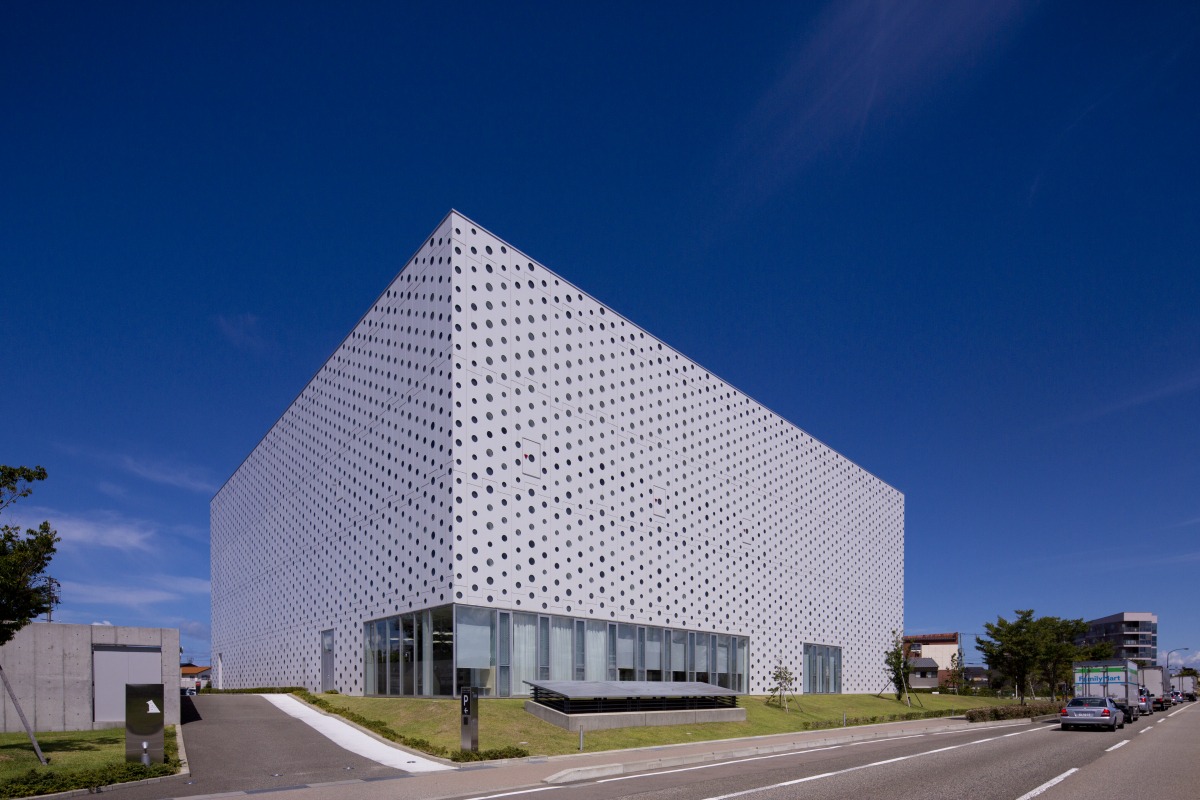
Get off at “Kanazawa Umimirai Library Mae” bus stop.
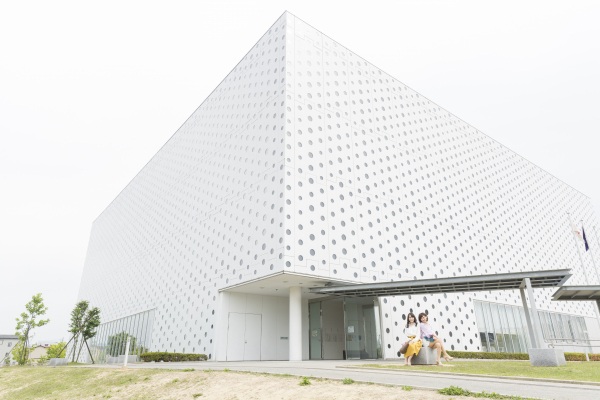
Kanazawa Umimirai Library
Designed by the architectural unit Coelacanth K&H (Hiroshi Horiba & Kazumi Kudo).
Resembling a white cake box dotted with circular windows, this innovative library was selected as one of the “World’s 20 Most Attractive Libraries” (2014, Fodor’s Travel). It has received numerous domestic and international architectural awards.
◆Completed: 2011
◆Designed : by Seilacanth K&H (architectural duo HORIBA Hiroshi & KUDO Kazumi)
Get off at “Ono” or “Ono Port” bus stop.
Kanazawa Port Ono Karakuri Museum
A Hands-On Karakuri Experience Museum
Located at the tip of Kanazawa Port, stretching out toward the Sea of Japan, this unique museum introduces the achievements of Benkichi Ono, a late Edo-period scientist and master karakuri artisan who lived and worked in Ono Town, Kanazawa.
The museum showcases the fascinating world of karakuri—mechanical devices that represent the dawn of modern technology in Japan. Visitors can actually touch, operate, and play with many of the exhibits, making it an engaging, hands-on experience for both children and adults.
The building itself is also a highlight. Designed by renowned architect Shozo Uchii, the structure is inspired by the traditional Kitamae-bune trading ships and features a striking laminated wood hyperbolic paraboloid form.
Enjoy discovering the ingenious world of karakuri—not just by looking, but by experiencing it firsthand.
◆Completed: 1996
◆Designed : by UCHII Shōzō (architect)