Museum Hopping around Kenrokuen (5 Hours)
Adjacent to Kenrokuen, the Hondanomori area was once the residence site of the Honda family, the leading clan among the “Kaga Eight Households” (senior retainers of the Kaga Domain). Today, this lush green district is home to a cluster of cultural institutions.
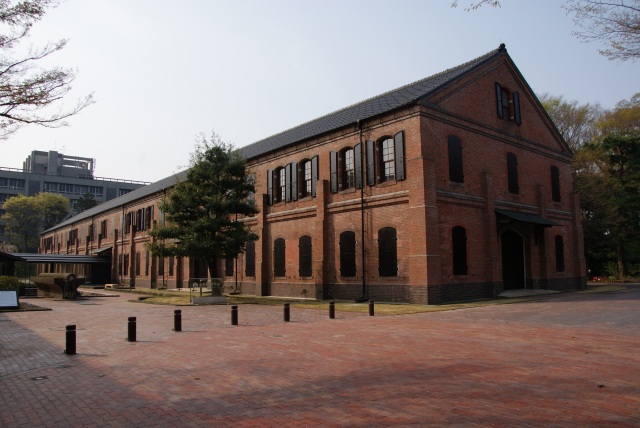
Since the relocation and opening of the National Crafts Museum from Tokyo in October 2020, the area has attracted renewed attention. The three striking red-brick buildings nearby—formerly army arsenals—are now museums collectively known as the “Red Brick Museums.” From there, the route continues past the Ishikawa Prefectural Museum of Art, down a scenic streamside path, linking to several remarkable museums within walking distance.
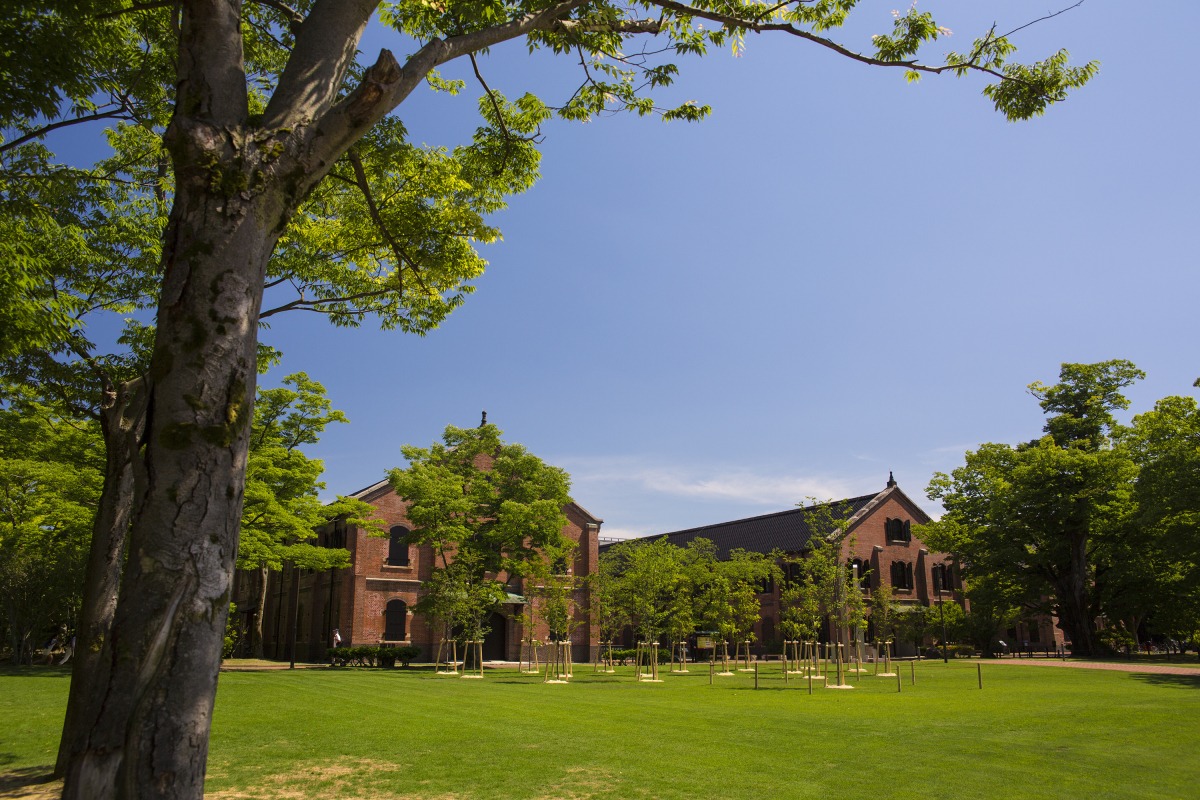
Get off at “Dewamachi” bus stop and walk about 3 minutes.
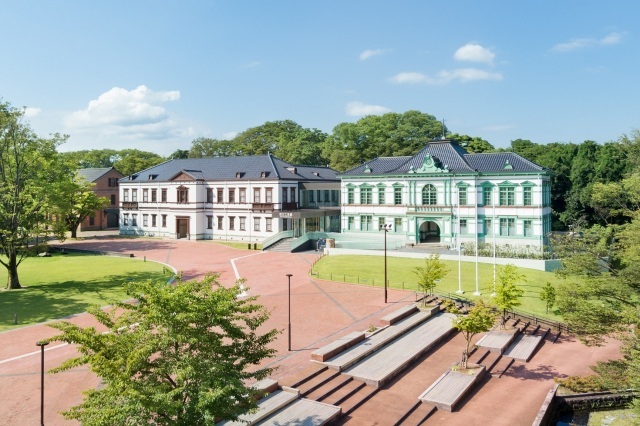
National Crafts Museum
Digging Deeper into Kogei
The National Crafts Museum is the only national museum specializing in crafts and the first national museum located on the Sea of Japan side of the country, but there is little wonder how it came to Kanazawa. Kanazawa has a long history of supporting the arts dating back to the ruling Maeda family’s patronage of the arts and culture starting over 400 years ago. Since then, the city has thrived as a center for Kogei, or traditional Japanese Crafts. Kanazawa is known as the “City of Crafts.” In fact, in 2009, UNESCO designated Kanazawa as a city of Crafts and Folk Art in its Creative Cities Network which eventually led to the relocation of the museum from Tokyo in 2020.
Housed in two historic Meiji-era (1868-1912) buildings formerly used by the military and restored with their original exteriors, the National Crafts Museum holds more than 4,400 craft and graphic design artworks primarily originating from the 20th century and is home to the finest examples of Japanese traditional crafts in the nation, including many pieces created by Japan’s Living National Treasures, the designation for master craftsmen of a specific traditional art or craft.
The National Crafts Museum is located near Kenrokuen Garden, in an area that is home to several of Kanazawa’s museums. It is recommended to visit after strolling through Kenrokuen, exiting from the Zuishinzaka or Kodatsuno Gate.
Ishikawa Prefectual Museum of History
Facilities for preserving and conveying Ishikawa's history and culture
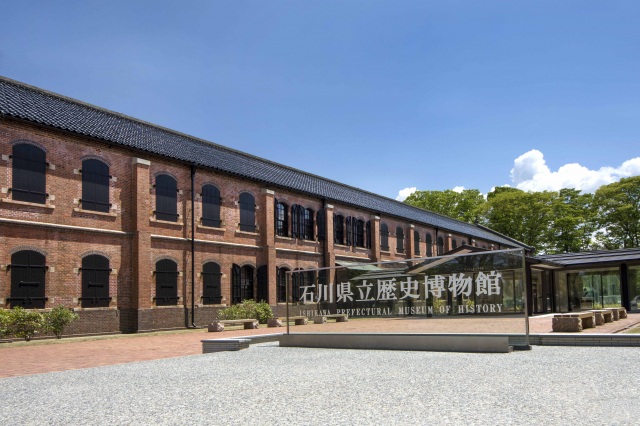
Located just 1 minute on foot from the National Crafts Museum, Ishikawa Prefectural Museum of History is the perfect place to gain an understanding of the samurai culture and politics of the Kaga Domain. As a peaceful city ruled by powerful Maeda lords, the Kaga Domain (now called Kanazawa) developed a unique samurai culture. The samurai (usually called bushi or buke in Japanese) had a huge impact on the development of this culture. Beautiful crafts such as kimono Kaga-yuzen (fabric dyeing); gold leaf; Kutani-yaki porcelain and Maki-e lacquerware production, as well as artforms like Noh theatre and the tea ceremony were an important part of the samurai way of life. The museum is housed in three, beautiful former armoury warehouses built at the end of the Meiji period (1868-1912) to the early Taisho era (1912-1926).
Kaga Honda Museum
Japan's rare Samurai artifact museum, passing on the Samurai culture of Hyakumangoku to the present times
Kaga feudal domain was known as "Hyakuman-goku" (the land of a million rice bushels) and had eight chief retainers. Honda clan was one of the "Big 8" and had an extraordinary high-yield fief worth 50,000 koku. The founder of the Honda Clan, Masashige Honda, was the second son of Masanobu who was a chief retainer of Ieyasu Tokugawa.
The Kaga-Honda Museum displays various artifacts: swords, armour, spears, arms, paintings, calligraphy, lacquerworks and other highly-valued artistic objects. The horse harness is also among the best of the collections in Japan.
One can gain a glimpse of an extraordinary culture and the history of feudal Japan through these items.
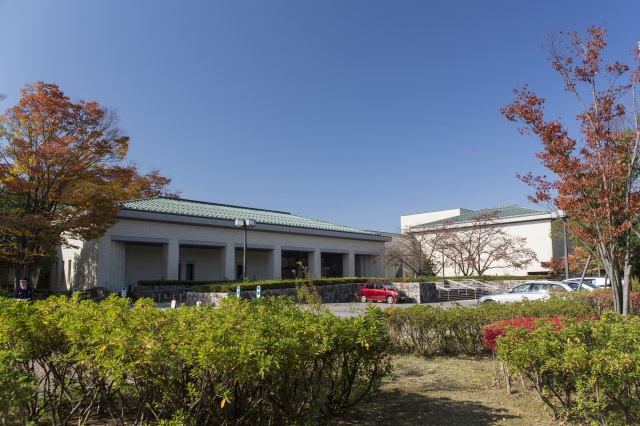
Ishikawa Prefectural Museum of Art
The Ishikawa Prefectural Museum of Art exhibits antique art objects, articles possessed by the Maeda family, Japanese paintings, oil paintings, sculptures, and modern handicrafts related to Ishikawa Prefecture. Traditional arts and crafts of artisans designated as Living National Treasures, a collection of Kutani porcelain works, and daimyo tools (feudal lord tools), such as Kaga lacquer works, are the highlights of the museum.
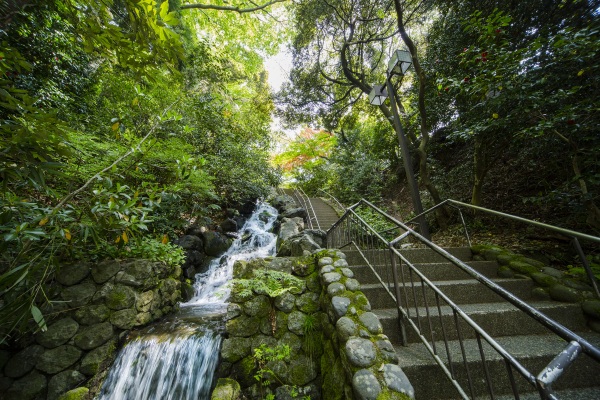
Art Path(Bijutsu-no Komichi)
Walking paths to fully experience the changes of the four seasons
The stone stairway "Bijutsu-no Komichi(Path of Art)" connecting the Ishikawa Prefectural Museum of Art and the Nakamura Memorial Museum is parallel to the Tatsumi Chanel flowing from Kenrokuen Garden, creating an atmosphere that will make you forget about the hustle and bustle of daily life.
Walking along the "Midori-no Komichi(Path of Green)" leading from Kanazawa Nakamura Memorial Museum to D.T. Suzuki Museum, you will find Honda Park, where you can see the "Former Honda Family Nagaya-mon Gate," a registered tangible cultural property of Japan. The Shofukaku Garden is also located next to the park, where you can feel the atmosphere of a samurai family's garden in those days.
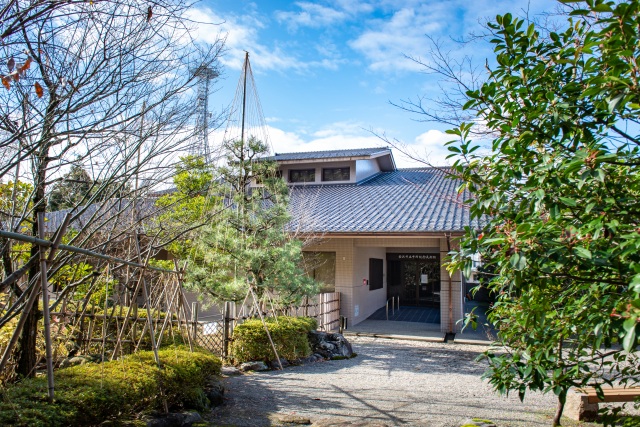
Nakamura Memorial Museum
The Nakamura family, who has been running a sake brewery in Kanazawa, moved and modified their own residence here, exhibited and opened their collection to public. Later, the museum was donated to Kanazawa City. Centering on noted articles of Japanese tea ceremony arts, the museum exhibits calligraphic works, paintings, lacquer ware, and pottery. There are a number of two or more Japanese tearooms used for tea ceremonies.
D.T. Suzuki Museum
Learn about the life and teachings of Kanazawa’s most famed philosopher
Known around the world, Daisetz Suzuki – also known as D.T. Suzuki – is one of Japan’s most famous Buddhist philosophers. His essays and teaching were incredibly influential in spreading Buddhist philosophy to the West.
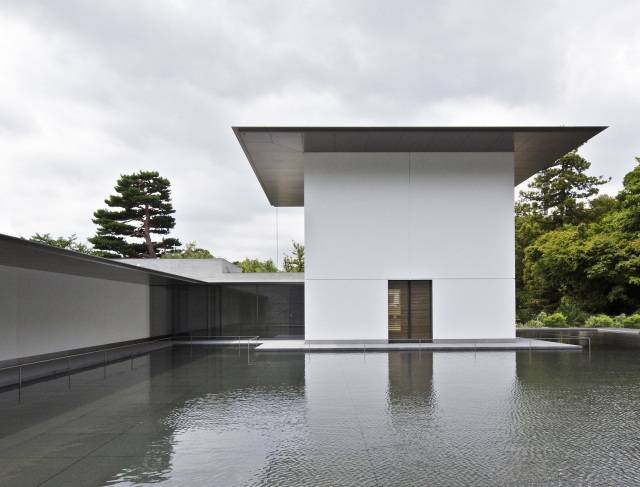
Born in Kanazawa, the philosopher is commemorated in city through the D.T. Suzuki Museum. The museum is located in the area of the city where D.T. Suzuki was born and comprises three wings – the Entrance Wing, the Exhibition Space Wing and the Contemplative Space Wing – as well as three gardens – the Vestibule Garden, the Water Mirror Garden and the Roji Garden.
In addition to containing many exhibits relating to the life of D.T. Suzuki, the museum also serves as a place of reflection for visitors as they contemplate his teachings.
21st Century Museum of Contemporary Art, Kanazawa
A hub for contemporary art in Kanazawa
Opened in 2004, the 21st Century Museum of Contemporary Art in Kanazawa stands out compared to more traditional art museums. The museum features a captivating disc-like design, as if it were a UFO touching down in the middle of Kanazawa. All the walls are made of glass and the building features five gates, all pointing towards different parts of the city.
The museum exhibits experimental contemporary art that visitors can touch or sit on and is perfect for children and adults alike. Some of museum’s highlights include commissioned works, which are integrated into the building’s unique design.
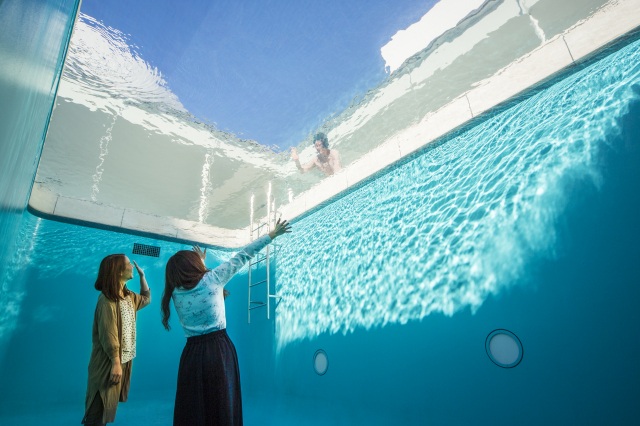
The 21st Century Museum of Contemporary Art excels at offering visitors unique experiences that can’t be found anywhere else. Highlights include Leandro Erlich's The Swimming Pool, which enables visitors to feel as if they’re standing at the bottom of a swimming pool, and a wall decorated with flowers gathered from the suburbs of Kanazawa.
Additionally, the museum's shop offers a wide variety of products, such as museum memorabilia, accessories, and selected goods.
Kanazawa Noh Museum
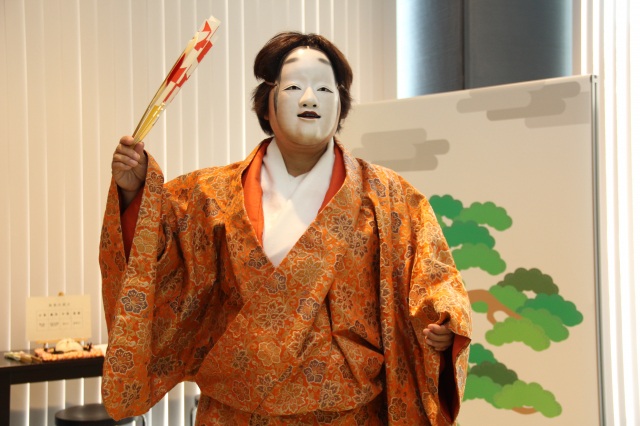
Noh (a major form of classic Japanese musical drama) of the Hosho School has been promoted among people in Kanazawa since the Edo period. Kaga Hosho, which is originated in Kanazawa, tells that Kanazawa is a prosperous ground of Noh Theater. The Kanazawa Noh Museum introduces the structure of Noh Theater with an actual stage reproducing Noh play. Besides, the museum exhibits Kaga Hosho's precious Noh masks and costumes handed down over generations.