Noh and Samurai Culture: The Legacy of Kanazawa's Maeda Clan
In Kanazawa, there is a saying that “Noh songs fall from the sky.” It evokes an image of carpenters singing Noh melodies as they work on rooftops, or gardeners humming them while pruning pine trees. Such was the atmosphere of this castle town, where the art of Noh was woven into everyday life.
Noh is often regarded as a traditional performing art that is difficult to understand or appreciate without prior knowledge. Yet in Kanazawa, even craftsmen and ordinary townspeople were familiar with it. How did this come about?
The answer lies in the protection and encouragement of the Maeda clan, who ruled the Kaga Domain during the Edo period (1603–1868). The domain lords were passionate about Noh and actively promoted it, allowing the art to spread beyond the samurai class to craftsmen and townspeople alike. Over time, this tradition developed its own distinctive character in Kanazawa and became known as Kaga Hosho.
This article explores the fundamentals of Noh, the history of Kaga Hosho, and places where you can experience this remarkable cultural heritage in Kanazawa today.
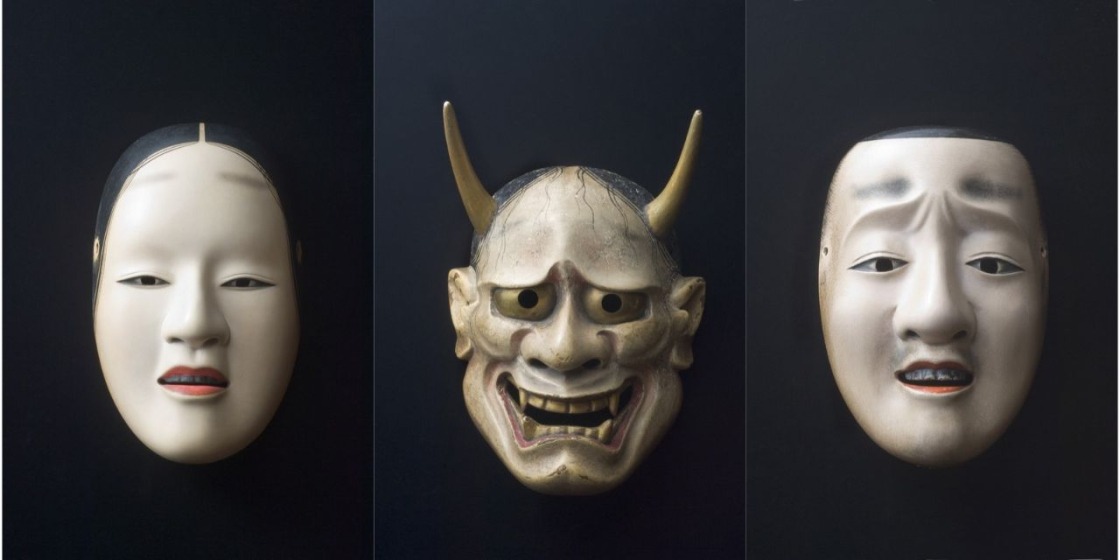
Photo of a Noh mask: Courtesy of the Ishikawa Prefectural Tourism League.
1. What Is Noh? Understanding the Basics
Noh and Kyogen: Two Traditional Japanese Performing Arts
Noh is one of Japan's most distinguished traditional theatrical arts. It was brought to its mature form in the 14th and 15th centuries by the father-and-son duo Kan'ami and Zeami.
Zeami in particular shaped its aesthetics and wrote many of the plays still performed today.
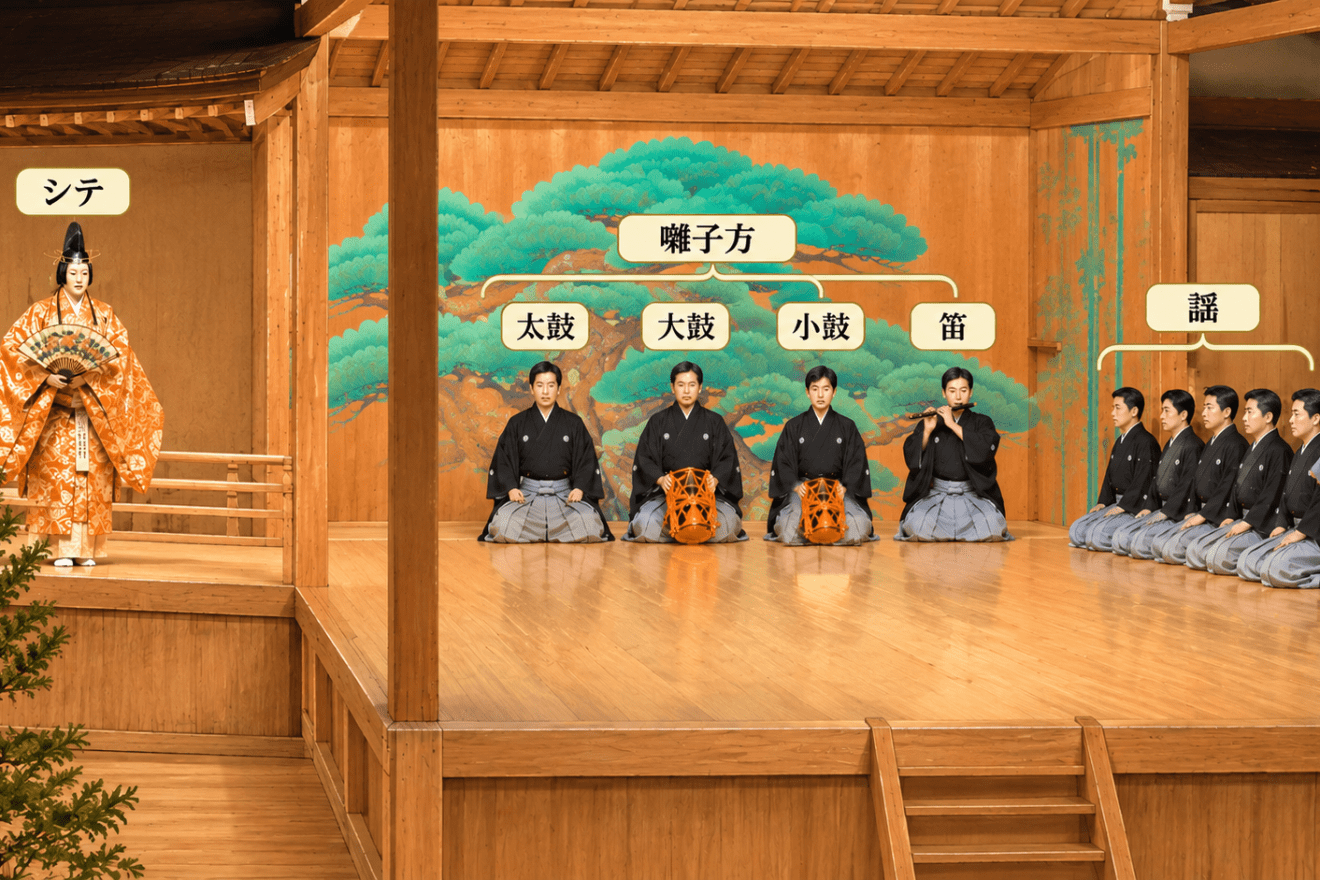
The lead performer, called the "shite" (pronounced "shee-teh"), often wears a a carved wooden mask and tells the story through slow, highly stylized dance and chant, supported by a chorus and a small ensemble of flute and drums known as the ”hayashi”.
Kyogen is Noh's comic counterpart, performed on the same stage, often between Noh plays.Where Noh dwells on the supernatural, the past, and deep emotion, Kyogen takes everyday life as its subject and finds humor in human weakness through lively dialogue.
Together, Noh and Kyogen are called "Nohgaku".
Nohgaku was proclaimed a Masterpiece of the Oral and Intangible Heritage of Humanity by UNESCO in 2001, and was inscribed on UNESCO's Representative List of the Intangible Cultural Heritage of Humanity in 2008.
The Hosho School and Kaga Hosho: A Tradition Passed Down in Kanazawa
There are five principal schools of performers who take the leading role (shite) in Noh: Kanze, Hosho, Konparu, Kongo, and Kita. Each school has its own artistic traditions and performance styles.
From the time of the domain's founder, MAEDA Toshiie, the Maeda clan mainly favored the Konparu school. Under the fifth lord, MAEDA Tsunanori, however, the domain adopted the Hosho school, which then spread widely throughout Kaga.
The Hosho tradition that took root in Kanazawa, embraced by lords, samurai, and townspeople alike, became known as "Kaga Hosho". Historical records suggest that it once had local features of its own, including differences in chanting and certain movements. Today it is performed within the wider Hosho school, while still carrying the memory of a Noh culture that grew up alongside Kanazawa's samurai society. Kaga Hosho was designated an Intangible Cultural Property of Kanazawa City in 1950.
In the Edo period, Noh was more than entertainment. It was the official ceremonial art of the samurai government, known as ”shikigaku”, and was performed at formal state occasions for the shogun and the feudal lords. Studying Noh was part of a samurai's education, in the way that music or fencing might have been part of a European aristocrat's. The lords of Kaga were among its most dedicated patrons, and they made Noh central to the domain's cultural identity.
Cultural Keywords of Ishikawa: Noh Musical Instruments
Do Noh Performers Always Wear Masks?
Noh is famous for its masks, but not every performer wears one.
Masks are primarily worn by the shite, the principal performer, when playing gods, demons, ghosts, women, or the elderly.
When the shite plays a living adult man, such as the warrior-monk Benkei in the play Ataka, he usually performs without a mask.
The waki, the supporting performer who interacts with the shite, generally does not wear a mask. The waki often portrays a living man, such as a traveling Buddhist monk or a warrior, who listens to the shite's story and moves the narrative forward.
A Noh mask is not simply a disguise. Subtle changes in its angle and movement convey emotions. Tilting the mask slightly upward, called ”terasu” ("to brighten"), suggests joy, while tilting it downward, ”kumorasu” ("to cloud"), suggests sorrow. Because the masks are carved with a deliberately neutral expression, the same face can seem to smile or grieve depending on the light and the performer's movement.
Even unmasked actors keep their faces still. Instead of facial expression, they convey emotion through restrained gestures, movement, and voice.
When you watch Noh, notice who wears a mask and who does not. Both the subtle play of the mask and the deliberate choice to perform without one show how much this art can express with so little.
2. The Maeda Lords and Noh : The History Behind the Birth of Kaga Hosho
MAEDA Toshiie and the Konparu School: The Beginnings of Noh in the Kaga Domain
The story of Noh in Kaga begins with the domain's founder, MAEDA Toshiie (1538–1599).
Toshiie was a devoted admirer of Noh. He not only enjoyed performances but also studied the art himself under Noh performers from the Konparu and Kanze schools.
His close ally, TOYOTOMI Hideyoshi, the warlord who reunified Japan in the late 16th century,
was a passionate Noh enthusiast with a particular fondness for the Konparu school. From Toshiie's time through the rule of the third lord, MAEDA Toshitsune, Konparu remained the principal Noh tradition in Kaga.
MAEDA Tsunanori and the Hosho School: Establishing the Foundations of Kaga Hosho
A turning point came under the fifth lord, MAEDA Tsunanori (1643–1724).
The shogun of the day, TOKUGAWA Tsunayoshi, was devoted to Noh and especially to the Hosho school. The shogun's tastes carried great weight with the feudal lords, and following his lead, Tsunanori embraced the Hosho school. In 1686, he invited HOSHO Tomoharu, the ninth head of the school, to Kaga. Tsunanori is also said to have performed the play Sakuragawa at Edo Castle at the shogun's command.
Tsunanori studied under Tomoharu and ordered the domain's own Noh performers to adopt the Hosho style. Noh in Kaga thus shifted from the Konparu tradition to the Hosho tradition, laying the foundation for what would become Kaga Hosho.
MAEDA Narinaga: A Domain Lord Who Performed Noh on the Stage at Kanazawa Castle
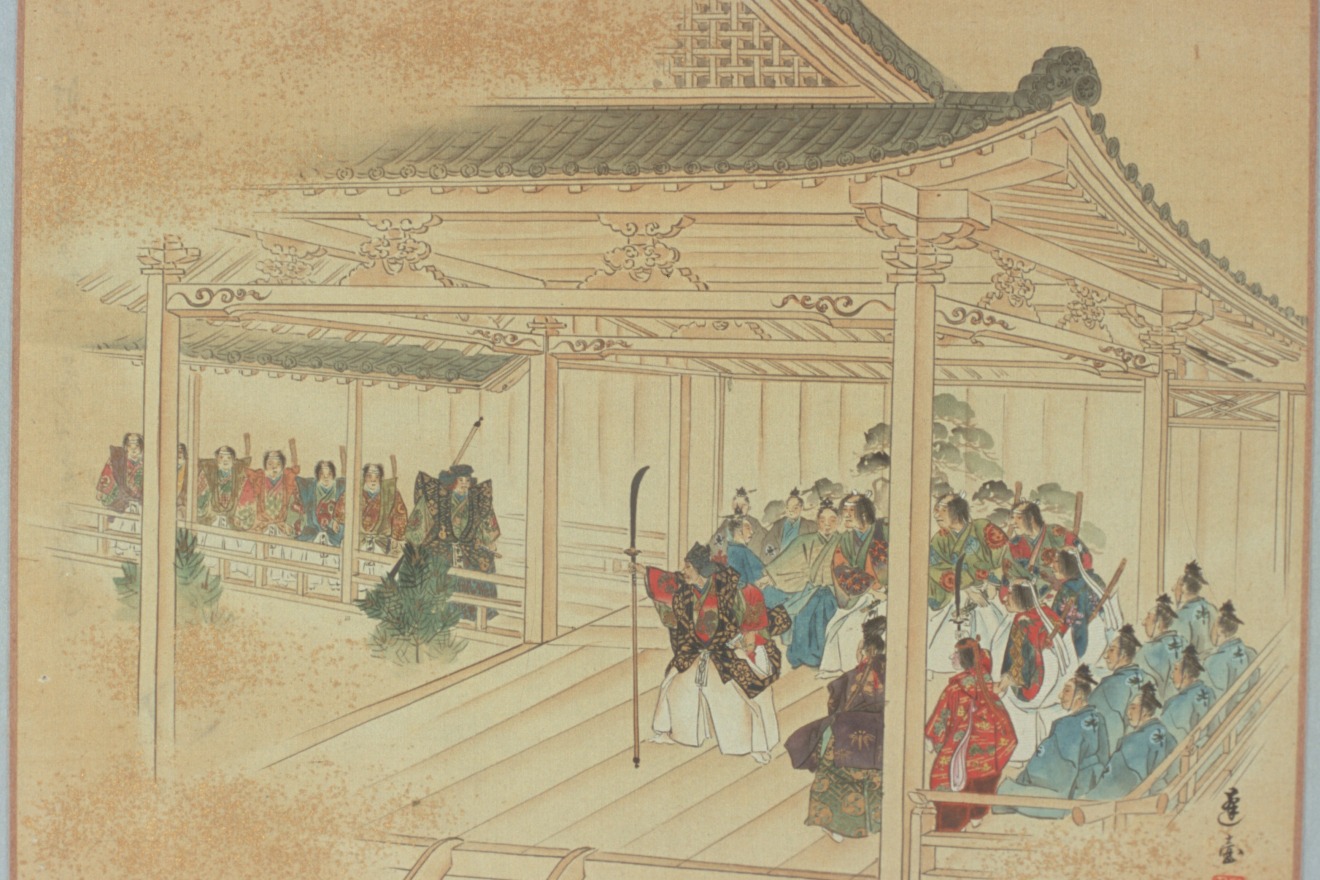
In the Kaga Domain, Noh was performed not only for entertainment but also at important ceremonies and formal occasions in the castle.
Of all the lords of Kaga, the twelfth, MAEDA Narinaga (1782–1824), was one of the most passionate about Noh.
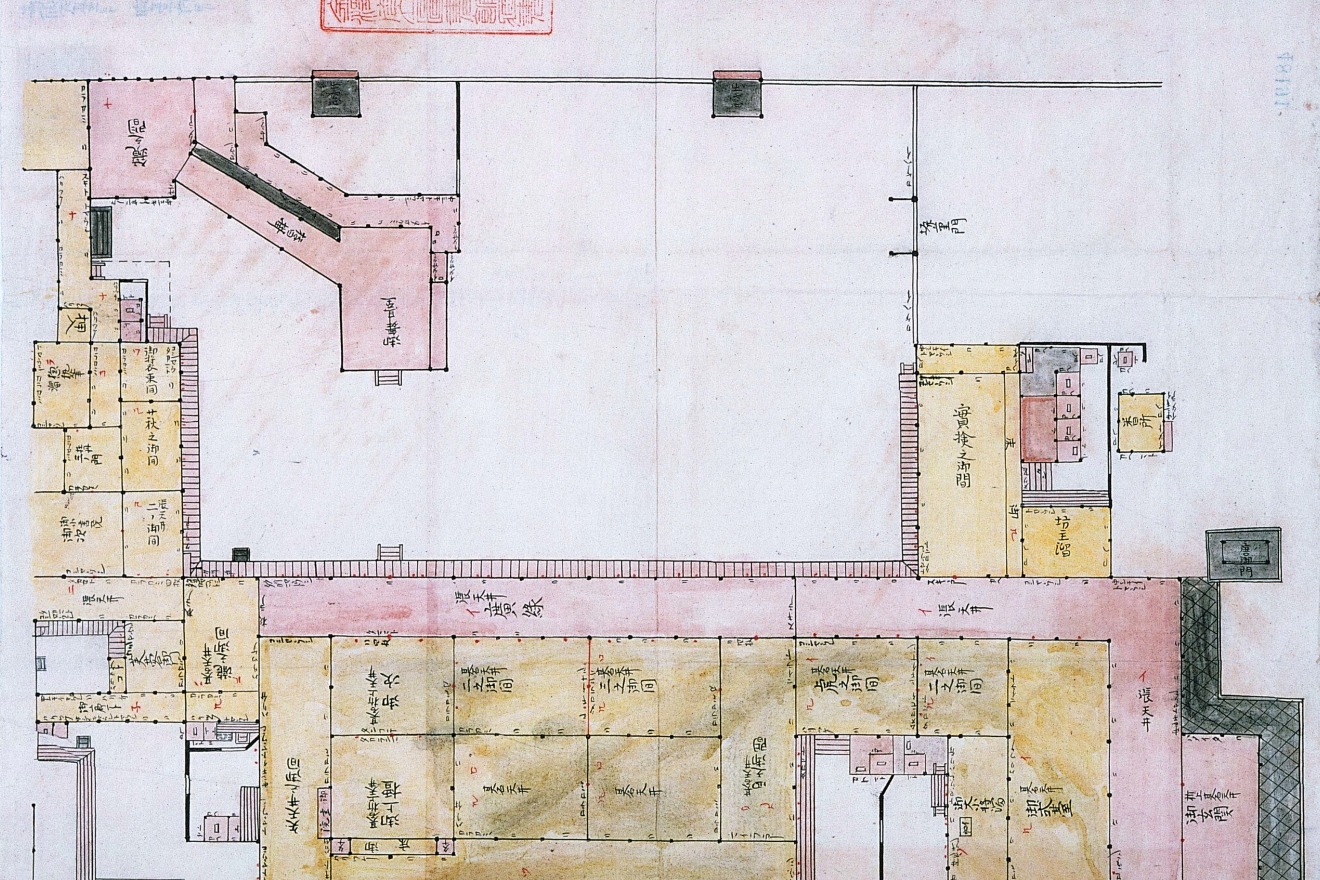
In 1808, a major fire destroyed the castle's Ninomaru Palace. The lord's residence was subsequently rebuilt with financial and material contributions not only from samurai retainers but also from people throughout the domain.
To celebrate its completion in 1811, six days of formal Noh performances were held. The following month, a further performance called "nagusami-nō" ("Noh for consolation") was staged to entertain and thank those who had helped with the reconstruction.
According to historical accounts, Narinaga himself performed the leading role (shite) at one of these events, entertaining his retainers and the people of the domain.
Noh was therefore more than a form of entertainment. It was also an important cultural practice through which the domain lord demonstrated his refinement and strengthened his relationships with both his retainers and the people under his rule.
3. From Craftsmen to Townspeople: How Noh Entered Everyday Life
Craftsmen as Noh Performers: The Domain's Official Workshops, Osai-kusho
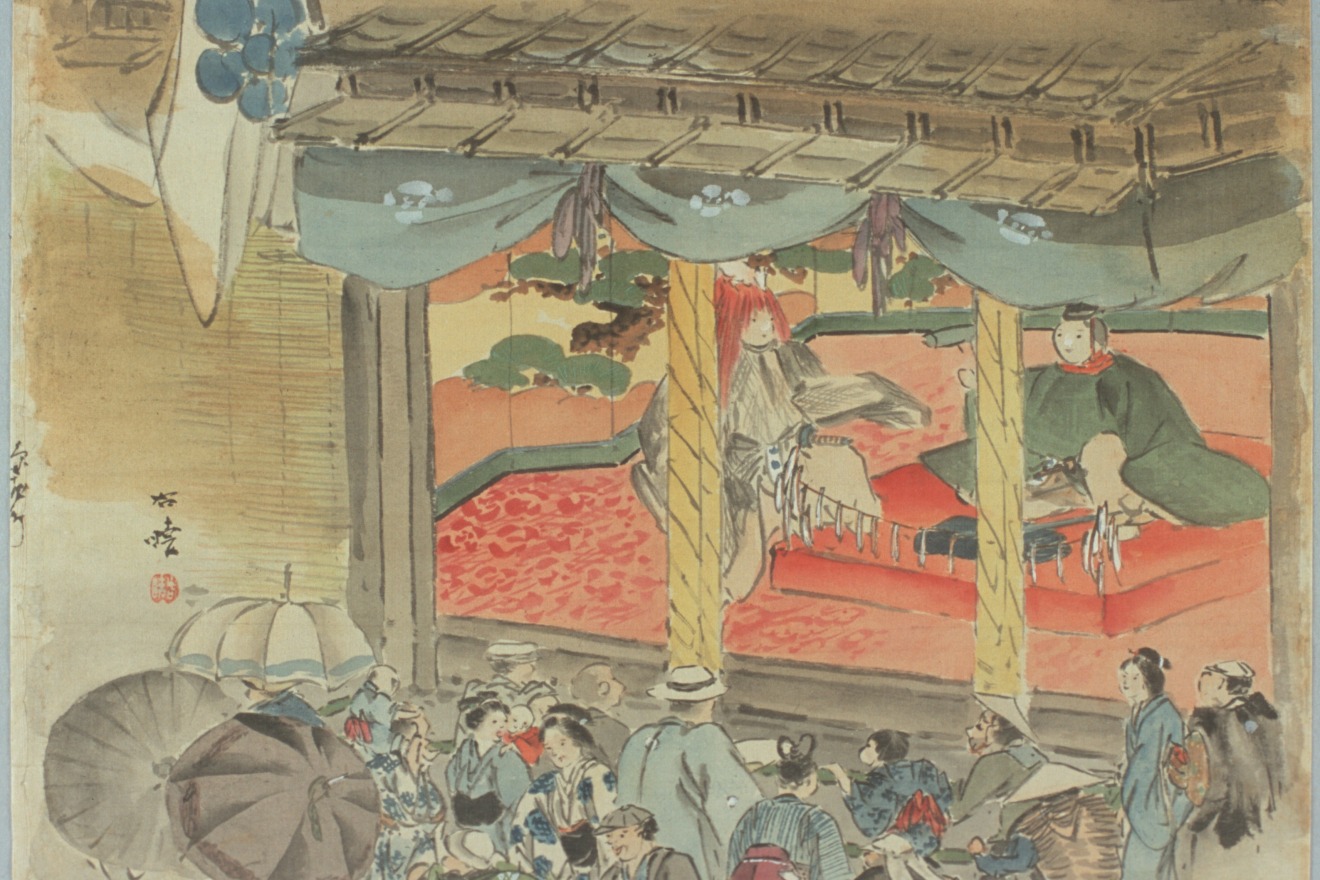
One of the most distinctive features of Noh culture in the Kaga Domain was that its practitioners were not limited to samurai and professional performers. Craftsmen and ordinary townspeople also became active participants.
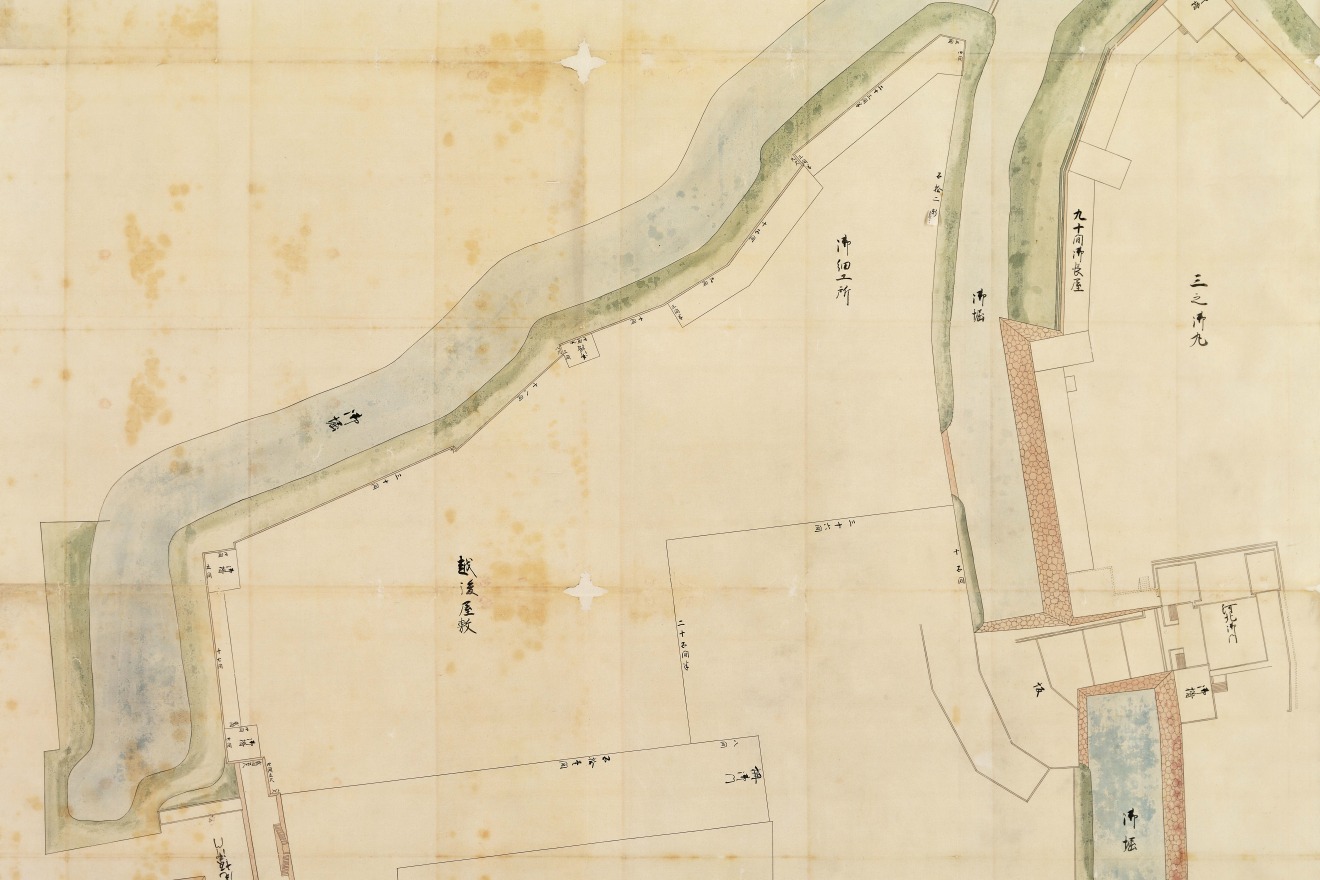
A key institution was the "Osaiku-sho", the domain's official workshops, where skilled artisans produced everything the domain needed, from weapons and armor to furnishings and decorative objects. These workshops are one of the roots of Kanazawa's celebrated crafts tradition.
The fifth lord, MAEDA Tsunanori, encouraged the workshop artisans to learn Noh alongside their trades, a practice described as "hon'yaku kengei": holding a principal craft post while also mastering an art.
The artisans trained in chanting, instrumental music, and supporting roles such as the "jiutai" (the chorus) and the "waki-zure" (companions of the waki), and they became an essential part of the company needed to stage a performance.
Some even took advantage of the domain's official journeys to Edo to study under Noh performers there. These journeys were part of sankin-kotai, the system under which feudal lords were required to alternate their residence between Edo and their own domains, accompanied by their retainers.
Others used the skills acquired through their regular occupations to create stage props known as tsukurimono, or to help dress performers and tailor Noh costumes.
In this way, Noh and Kaga's crafts culture developed hand in hand.
Townspeople Take to the Stage: Noh Spreads Throughout the Castle Town
Noh spread further still, into the lives of ordinary townspeople.
Under the Kaga Domain, townspeople who learned Noh while maintaining their regular occupations were permitted to appear in performances held within the castle as machi-yakusha, or townspeople performers.
Some were even granted special privileges, such as permission to use family names, a privilege generally restricted to the samurai class, or exemptions from certain taxes.
Noh thus spread through every level of society, from the lord and his samurai to craftsmen and townspeople.
Noh Chanting in Daily Life: The City Where Noh Songs Fall from the Sky
Noh was not confined to the theater. It also became part of everyday life.
Noh chanting was incorporated into important occasions, including utai-zome, the first Noh chanting of the New Year, house-raising ceremonies held during construction, and wedding celebrations. Learning Noh chanting was regarded as an ordinary accomplishment among the people of Kanazawa.
Another version of the saying goes “when you visit Kanazawa, Noh songs come drifting down from the pine trees.” It is said to have originated from the fact that even gardeners pruning pine trees would hum Noh melodies while working.
The expression “Kanazawa, the city where Noh songs fall from the sky” captures the extent to which Noh had become deeply rooted in everyday life, extending far beyond samurai and professional performers to the wider community.
4. After the Samurai: How Kaga Hosho Survived the Modern Era
The Crisis and Revival : SANO Kichinosuke
The Meiji Restoration of 1868 brought an end to the feudal domain system. Many of the samurai who had supported Noh lost their positions and livelihoods, and Kaga Hosho faced a serious crisis.
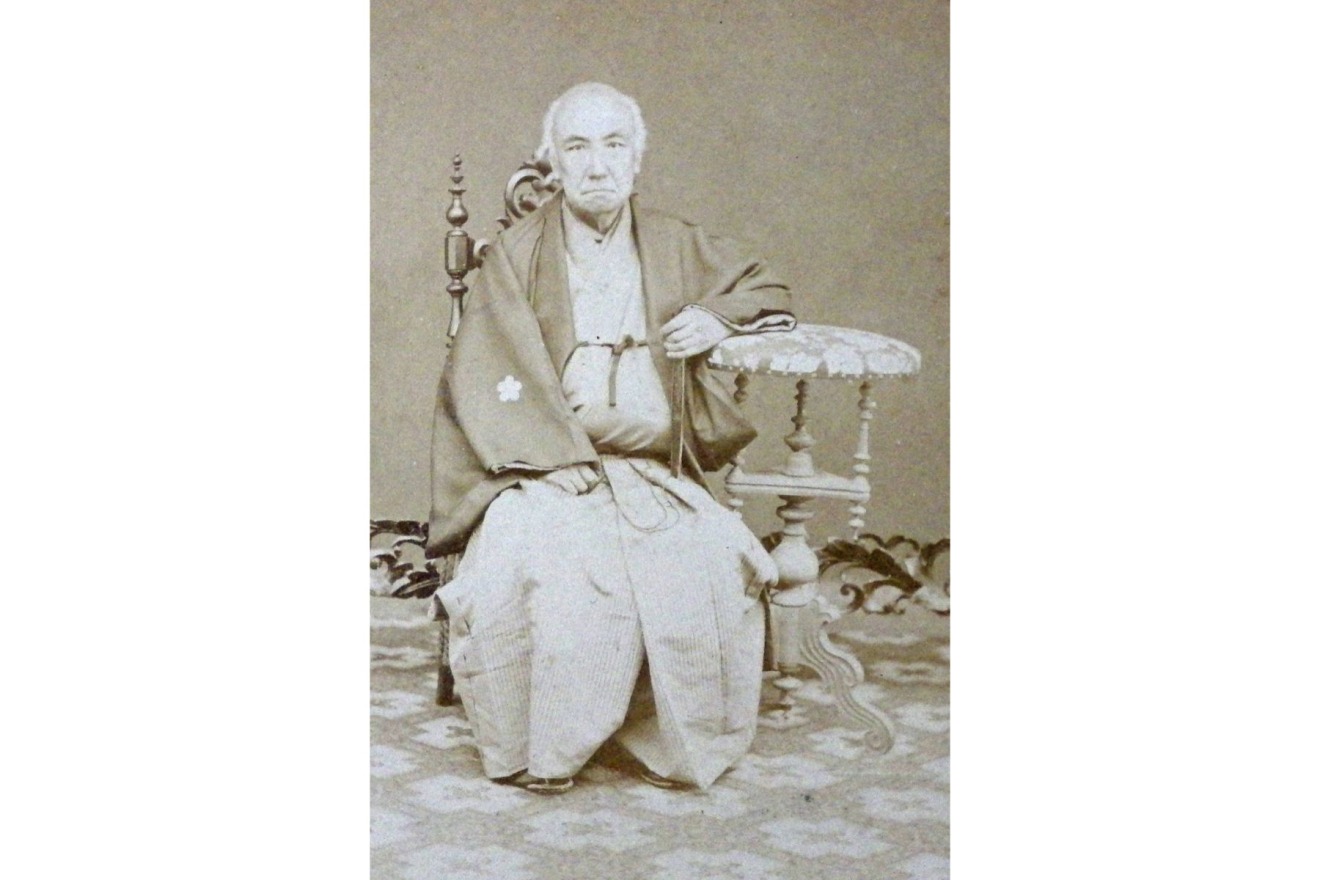
A central figure in its revival was SANO Kichinosuke I, often called the man who brought Kaga Hosho back to life.
Sano had studied under performers formerly employed by the domain, and he devoted his own fortune to reviving Noh. In 1900 he built a stage, the Sano Stage, and in 1901 the Kanazawa Noh Society was founded with Sano at its center.
The tradition was subsequently carried on by Kichinosuke SANO II. In 1932, the Kanazawa Noh Theater was completed in Hirosaka. Its main stage was relocated in 1971 to the site of today's Ishikawa Prefectural Noh Theater. The Ishikawa Prefectural Noh Cultural Center opened there in 1972, and the facility was renamed the Ishikawa Prefectural Noh Theater in 1986.
In 2023, the historic main stage was registered as a Tangible Cultural Property of Japan.
Even without the patronage of the domain, people who loved Noh continued to protect it and pass it on.
MAEDA Nariyasu: The Domain Lord Who Preserved Noh and Left His Mark on Tokyo
Another major figure was the thirteenth lord of Kaga, MAEDA Nariyasu (1811–1884).
Nariyasu is said to have performed Noh himself more often than any of his predecessors. He practiced for many years and wrote a treatise, "Sarugaku Menpairon", in which he reflected, from his own experience, on the physical and mental benefits of Noh dance and chant.
His passion did not fade after he retired, and he played an important part in Noh's revival after the Restoration.
In 1875, he built a Noh stage at his retirement residence in Negishi, Tokyo. The following year, he performed before Emperor Meiji in a "tenran-nō", a performance in the emperor's presence, appearing alongside professional actors.
After his death, the Negishi stage was moved in 1919 to the residence of MATSUDAIRA Yoritoshi in Somei, Tokyo, where it became known as the Somei Noh Theater. It was dismantled in 1965, but its parts were carefully kept. In 1996, after efforts by local residents and others, it was reassembled in Yokohama, where it serves today as the main stage of the Yokohama Noh Theater.
Another trace of Nariyasu can be found at Yasukuni Shrine in Tokyo. In 1881, a Noh theater was built in Shiba Park, and above the front of its stage hung a plaque bearing the characters for "Nohgaku" in Nariyasu's own hand. In 1903, the theater was moved to the grounds of Yasukuni Shrine, where it stands today as the Yasukuni Shrine Noh Stage.
The term "Nohgaku" itself, used for Noh and Kyogen together, came into wide use only in the Meiji period, replacing the older name "sarugaku". That a former lord of Kaga wrote out this new name by hand at that moment is a small but telling detail in the history of Japanese performing arts.
MAEDA Toshika: From Fukagawa to an Inn in Izu
MAEDA Toshika (1841–1920), a son of Nariyasu and the last lord of the Daishoji Domain (in present-day Kaga City, Ishikawa Prefecture), also carried the family's love of Noh beyond Kaga.
Toshika studied Noh under his father from childhood, performed throughout his life, and appeared alongside his father before Emperor Meiji in 1876. After the Restoration, he performed mainly in Tokyo and contributed to Noh's revival there.
A Noh stage that Toshika donated is believed to have originally stood at Tomioka Hachimangu Shrine in Fukagawa, Tokyo. In the late Meiji period, ASABA Yasuemon, seventh head of the Asaba family of Shuzenji on the Izu Peninsula, had the stage moved from Tokyo to his family's inn.
Today known as the "Gekkei-den", the stage appears to float on the pond of the historic Asaba ryokan. It still hosts Noh, Kyogen, and other traditional performances and has become the inn's best-known feature.
The Noh heritage cherished by the Maeda family survives not only in Kanazawa but in places far beyond it, from Tokyo and Yokohama to Shuzenji in Izu.
5. Where to See, Learn About, and Experience Kaga Hosho in Kanazawa
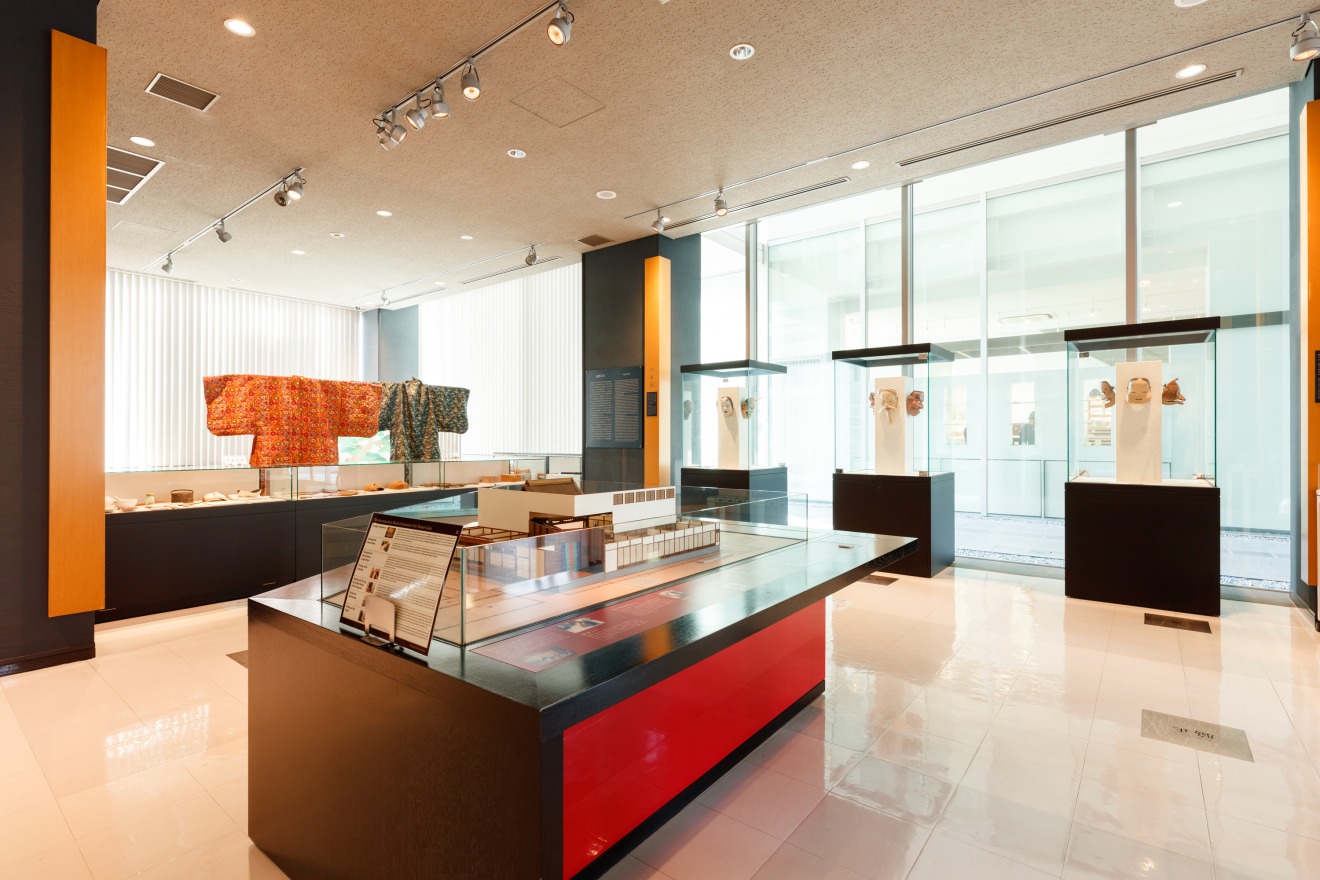
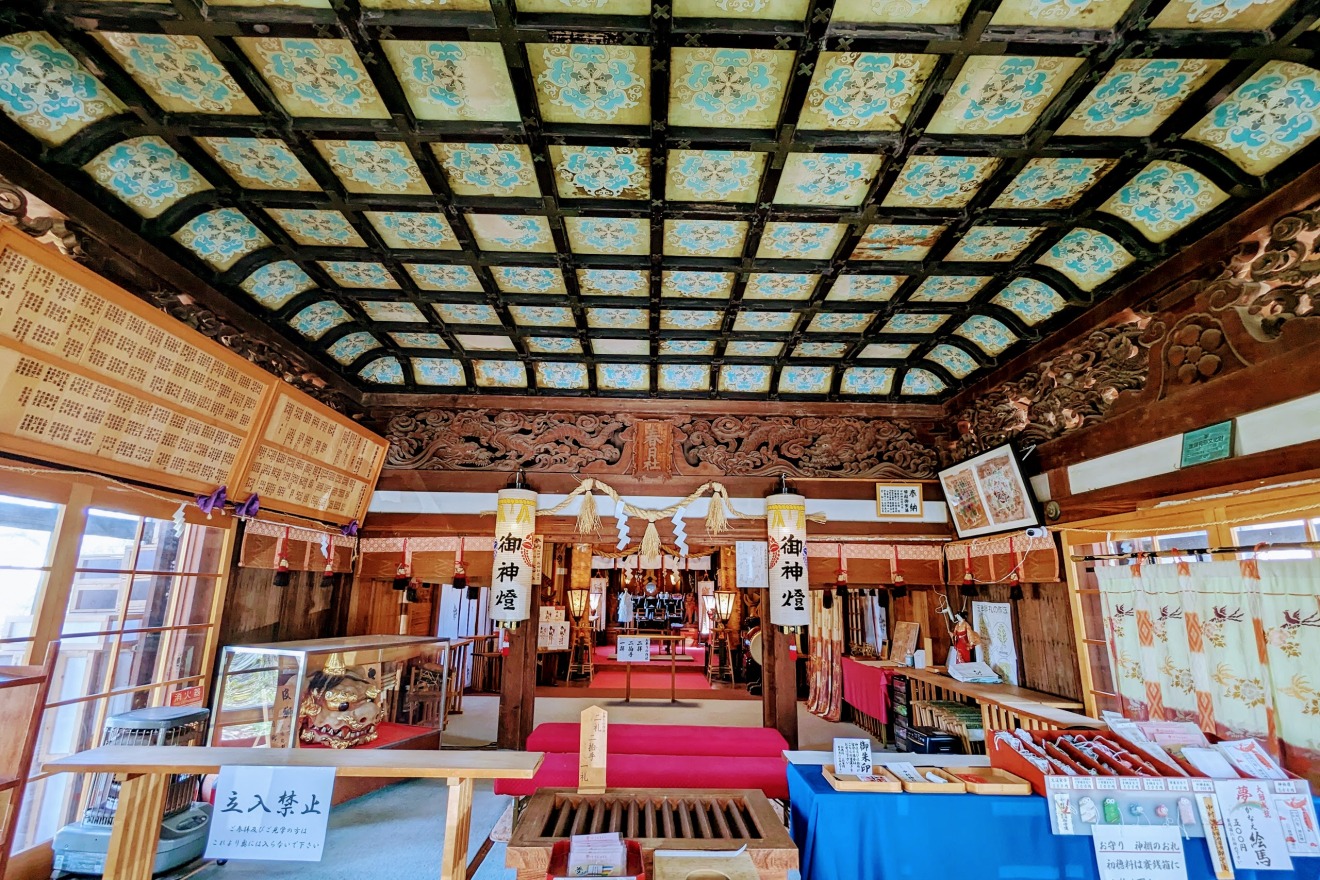
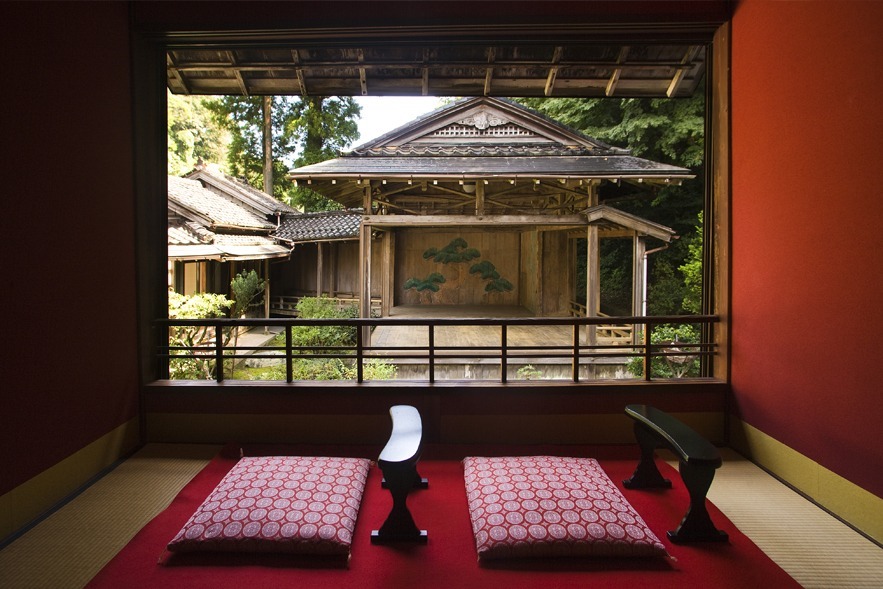
Now that you know the story of Kaga Hosho, why not experience it for yourself? Kanazawa offers many ways in: live performances, museums of masks and costumes, and historic stages that still carry the atmosphere of the domain era.
1. Ishikawa Prefectural Noh Theater – Experience Noh on an Authentic Traditional Stage
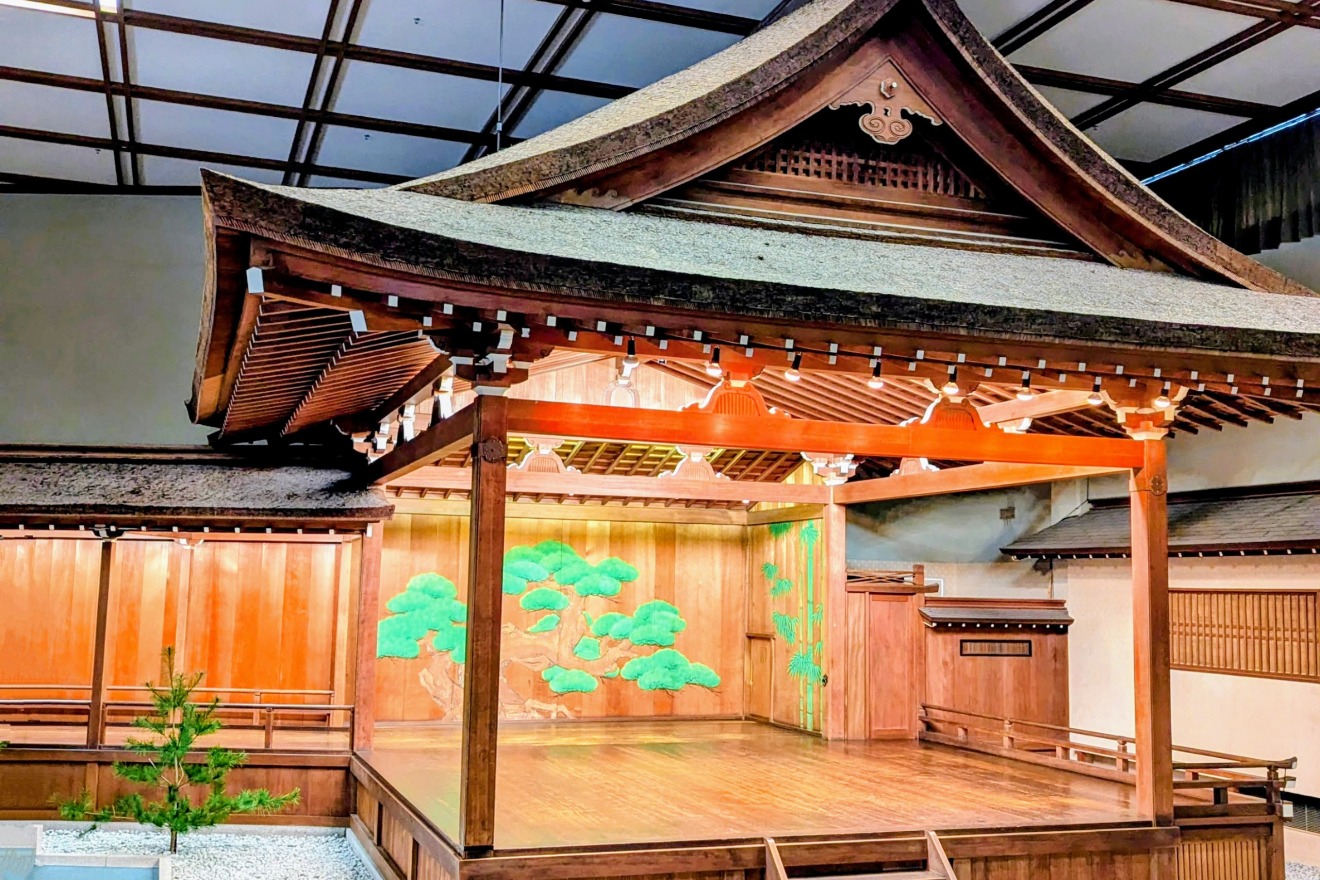
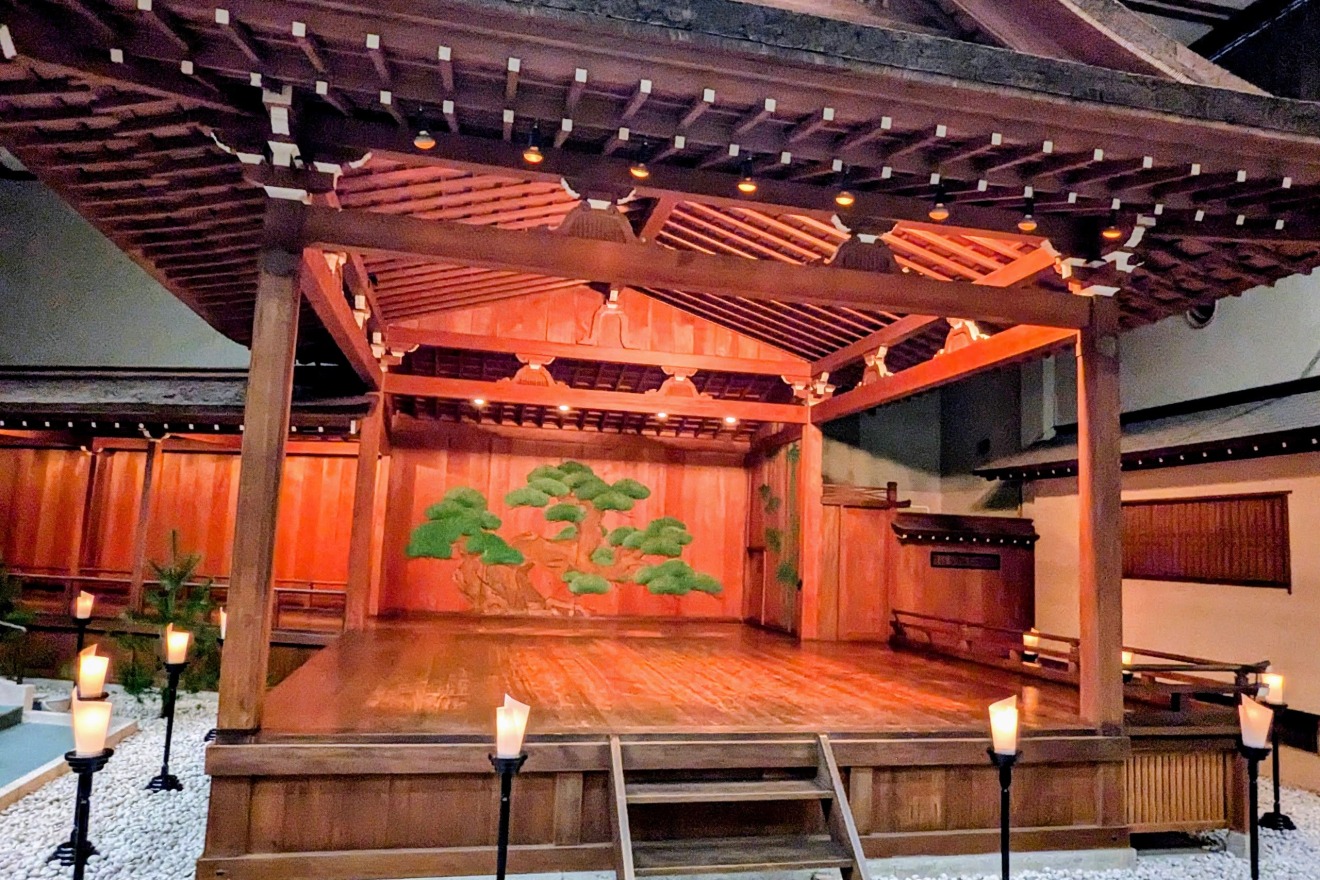
Opened in 1972 as the Ishikawa Prefectural Noh Cultural Center and renamed in 1986, this was the first publicly run Noh theater in Japan.
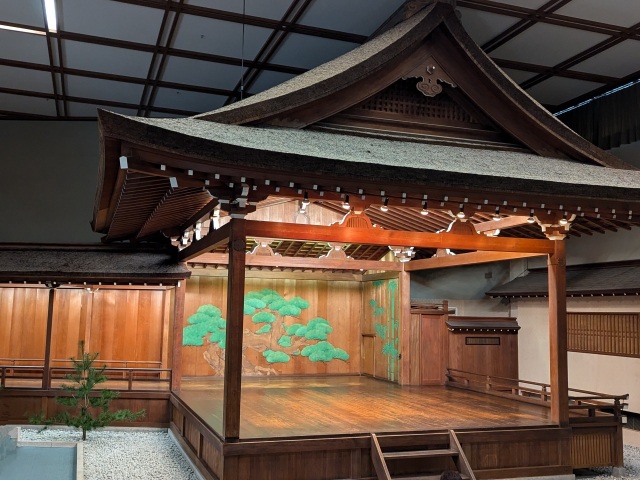
Its main stage was moved here in 1971 from the former Kanazawa Noh Theater, built in 1932 by SANO Kichinosuke II. It preserves the classic features of a Noh stage: an "irimoya"-style roof (a hip-and-gable design), roofing of cypress bark, and the "hashigakari", a long railed bridge along which performers make their entrances from behind the curtain. In Noh, this bridge is itself part of the stage, often suggesting a passage between this world and the next.
The stone foundations incorporate Tomuro stone, a volcanic stone also used in Kanazawa Castle and other historic buildings in the region. In 2023, the main stage was registered as a Tangible Cultural Property of Japan.
-Regular Performances by the Kanazawa Noh Society
Held monthly except in April and August, these performances include both Noh and Kyogen and offer a chance to see authentic Kaga Hosho by local professional performers.
-An Evening of Noh Performances (Kannō no Yūbe)
An accessible series designed for newcomers, held mainly in summer (July–August) and winter (January–March).
Dates, programs, and admission fees change each year, so please check the schedule in advance.
2. Ishikawa Prefectural Noh Theater – Behind-the-Scenes Visits
When no performances or rehearsals are scheduled, the theater may be open to visitors. Staff-guided tours or access to the stage may require advance reservations depending on the type of visit, so please contact the theater beforehand.
Check available visiting dates: Official website
3. Kanazawa Noh Museum – See, Learn, and Try On Masks and Costumes
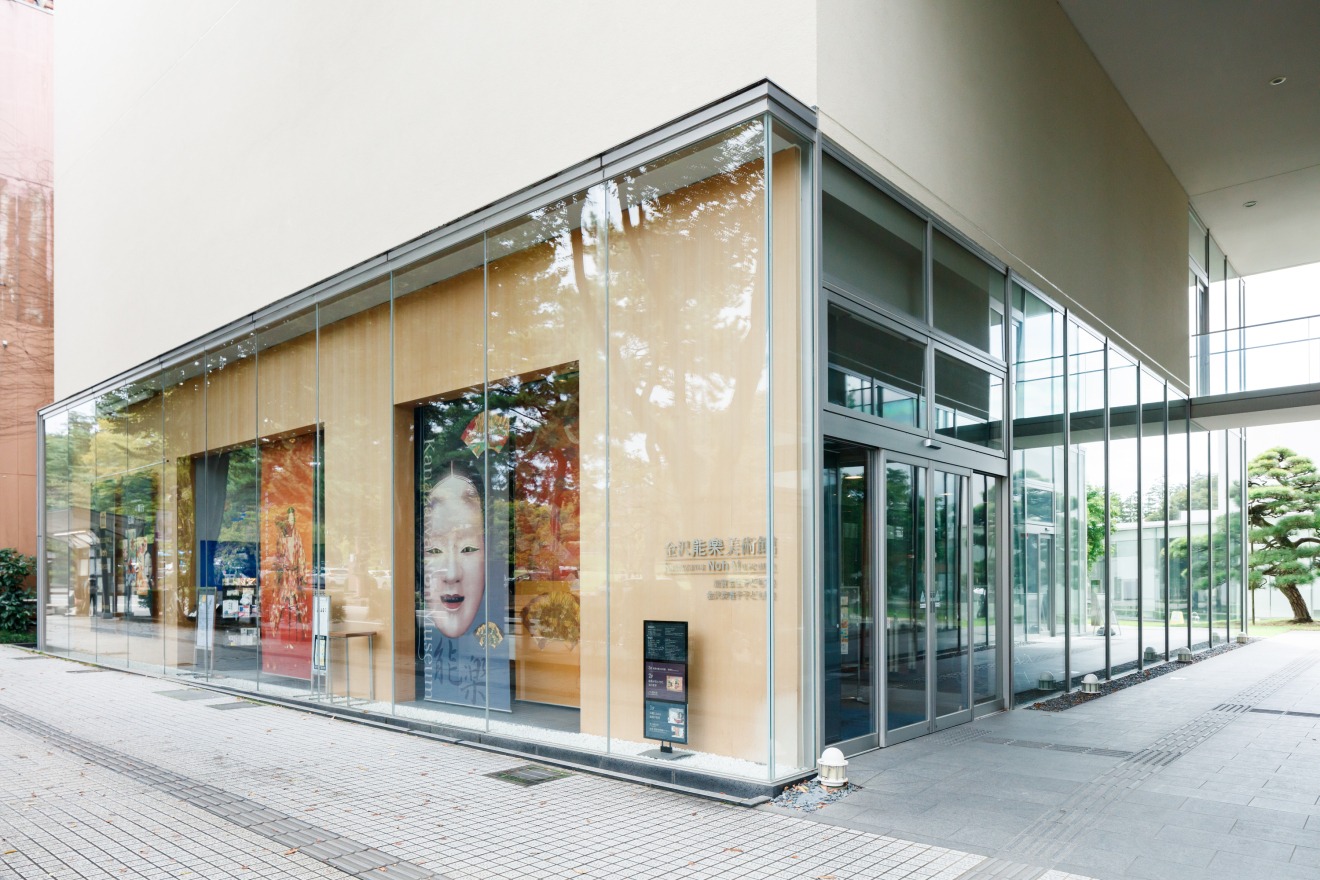
The Kanazawa Noh Museum stands in the Hirosaka district, next to the 21st Century Museum of Contemporary Art, Kanazawa, on a site associated with the former Kanazawa Noh Theater. It houses Noh masks and costumes handed down through the Kaga Hosho tradition and is an ideal first stop for anyone new to Noh.
-Explore the Structure of a Noh Stage
On the first floor, a full-size Noh stage space has been recreated, with the positions of actors and musicians marked on the floor, so you can see at a glance how a performance is laid out.
-Admire Historic Noh Masks and Costumes
Take time with the subtle expressions of the masks and the rich colors and patterns of the costumes, which reflect the highest levels of Japanese textile and decorative craftsmanship.
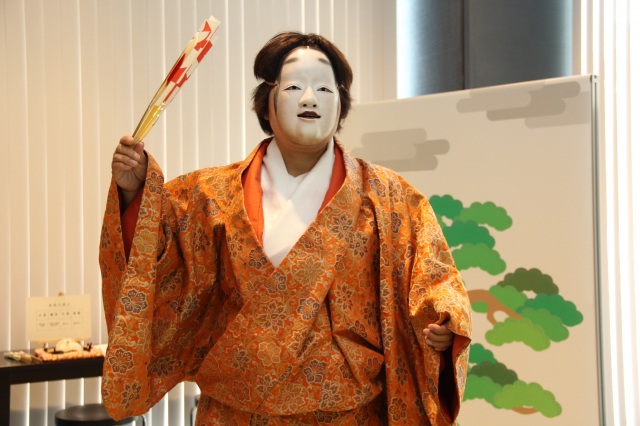
-Try On Authentic Noh Masks and Costumes
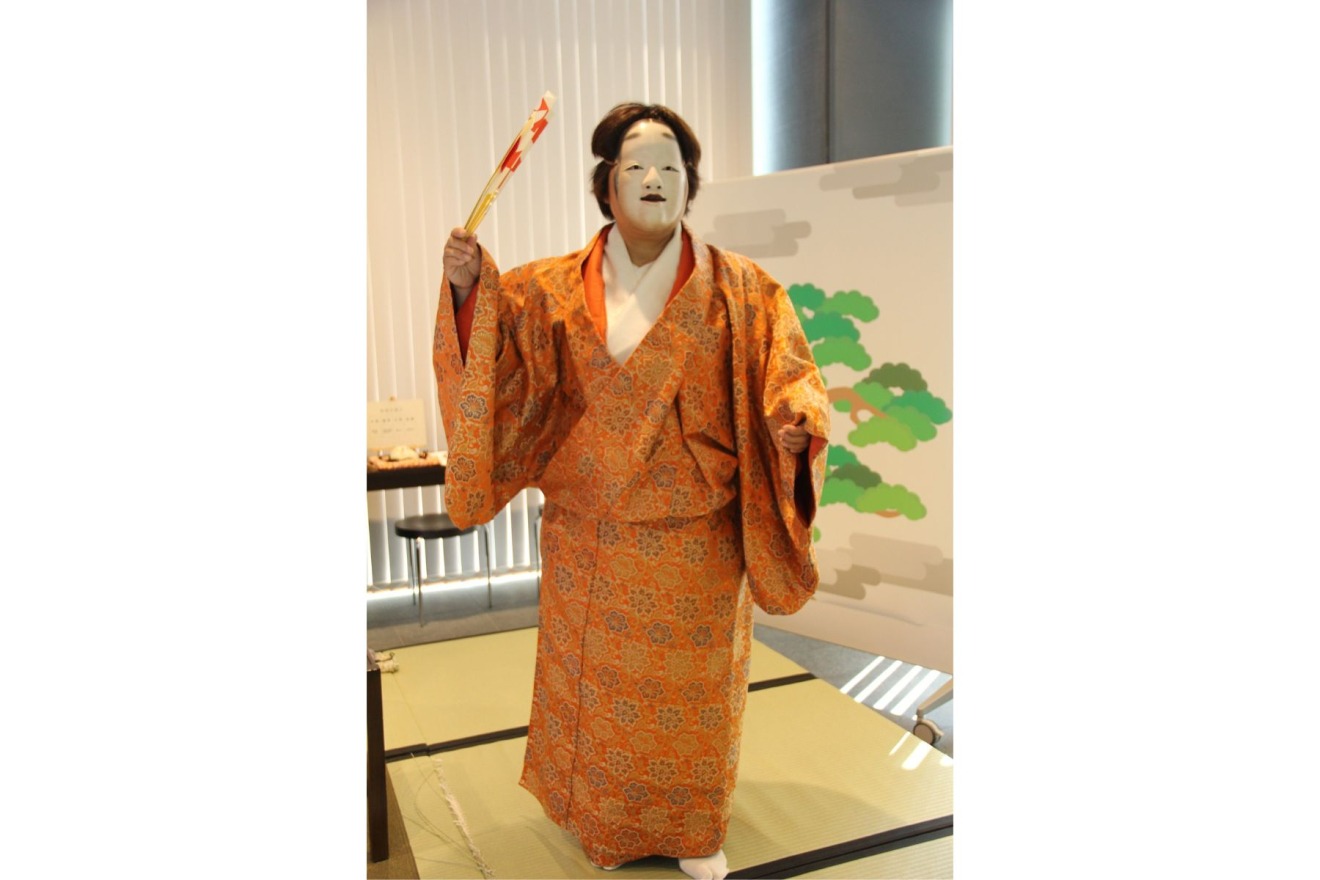
A highlight of the museum is the chance to wear real Noh masks and costumes and to take commemorative photos. Looking out through the tiny eyeholes of a mask, you will quickly understand how much skill it takes to move across a stage wearing one. This experience is generally offered on Fridays, weekends, and public holidays. Hours, fees, and available costumes may change, so please check the official website before visiting.
Visitor Information
・Address: 1-2-25 Hirosaka, Kanazawa, Ishikawa
・Tel: 076-220-2790
・Opening hours: 10:00–18:00 (last admission 17:30)
・Closed: Mondays (or the following weekday when Monday is a public holiday), year-end and New Year holidays, and other designated days
・Admission: Adults and university students ¥310; visitors aged 65 and over ¥210; high school students and younger visitors free
4. Nakamura Shrine – A Castle Noh Stage Reborn as a Shrine Hall
The worship hall ("haiden") of Nakamura Shrine in Nakamura-machi is believed to incorporate a Noh stage that once stood in the Ninomaru Palace of Kanazawa Castle.
The structure dates from the late Edo period. In the early Meiji period, it was moved and converted into the worship hall of a shrine to the war dead on Mount Utatsu, and around 1965 it was moved again to its present site. It is registered as a Tangible Cultural Property of Japan.
Look closely at the decorative transoms, elaborate carvings, and the impressive coffered ceiling with raised central sections, known as oriage-gōtenjō. Standing here, it is easy to imagine a lord of Kaga dancing on this very stage before his assembled retainers.
・Address: 16-1 Nakamura-machi, Kanazawa, Ishikawa
5. Ohno Minato Shrine – Over 400 Years of Sacred Noh
Every year on May 15, Ono Minato Shrine in Teranaka-machi, Kanazawa, presents *Teranaka Shinji Noh*, Noh performed as an offering to the shrine's deities.
The tradition began in 1604, when the second lord of Kaga, MAEDA Toshinaga, donated a Noh stage in thanks for victory at the Battle of Sekigahara, the decisive battle of 1600 that opened the way to Tokugawa rule. First supported by the domain, the performance has been sustained since the Meiji period by local parishioners and the Kanazawa Noh Society, among others. The present stage was built in 1907.
That this offering has continued for more than four centuries shows how the people of Kanazawa have kept Noh alive as their own. The annual performance is designated an Intangible Folk Cultural Property of Kanazawa City.
・Address: Ha-163 Teranaka-machi, Kanazawa, Ishikawa
・Tel: 076-267-0522
6. Kanazawa Castle Park – Hyakumangoku Takigi Noh
Each June, as part of the Kanazawa Hyakumangoku Festival, which celebrates MAEDA Toshiie's entry into Kanazawa in 1583, "Hyakumangoku Takigi Noh" is staged in Kanazawa Castle Park. "Takigi" means firewood: performed outdoors after dark by the light of bonfires, Kaga Hosho takes on an especially atmospheric, almost otherworldly quality.
The date, venue, and admission arrangements vary from year to year, so please check the latest information in advance.
7. Stay at an Inn with Its Own Noh Stage – Motoyu Ishiya
In Fukatani Onsen, a hot-spring area on the outskirts of Kanazawa, Motoyu Ishiya is a historic inn said to date back to 1789.
Inside stands a splendid Noh stage built entirely of Japanese cypress (hinoki) in 1917 by the sixth-generation owner, ISHIYA Nizaemon, to celebrate the birth of a grandchild. It is a vivid reminder that the love of Noh fostered by the lords of Kaga came to be shared just as deeply by the townspeople.
Kanazawa's Noh tradition flourished under the patronage of the Kaga domain lords and eventually spread to ordinary townspeople. The passion for this art shared by the inn's owner is still reflected in this stage today.
YouTube: Exploring the Noh Theatre – Ishikawa Prefectural Noh Theatre – Noh Stage
- Kanazawa Noh Museum
-
- more
- Ishikawa Prefectural Noh Theater
-
- more
- Kanazawa Noh Theatre Regular Noh Performance
-

- Experience the harmony of dance, the music and chanting, the beauty of Noh masks and costumes, and immerse yourself in the world of Noh.
- more
- Motoyu Ishiya
-

- An old-style inn that chose a classic feel rather than a modern one
- more
6. Experiencing Noh in Kanazawa
Kanazawa's Noh culture is more than an art once enjoyed by the lords of Kaga. It is a tradition that took root in everyday life and has been carried forward by samurai, workshop artisans, townspeople, and local communities alike.
See an authentic performance at the Noh theater, discover the beauty of masks and costumes at the Kanazawa Noh Museum, or visit the shrines where historic stages still stand. Each offers a different way into the world of Kaga Hosho.
Kanazawa: The City Where Noh Songs Fall from the Sky.
Come and discover the story behind those words, and experience the living world of Kaga Hosho for yourself.
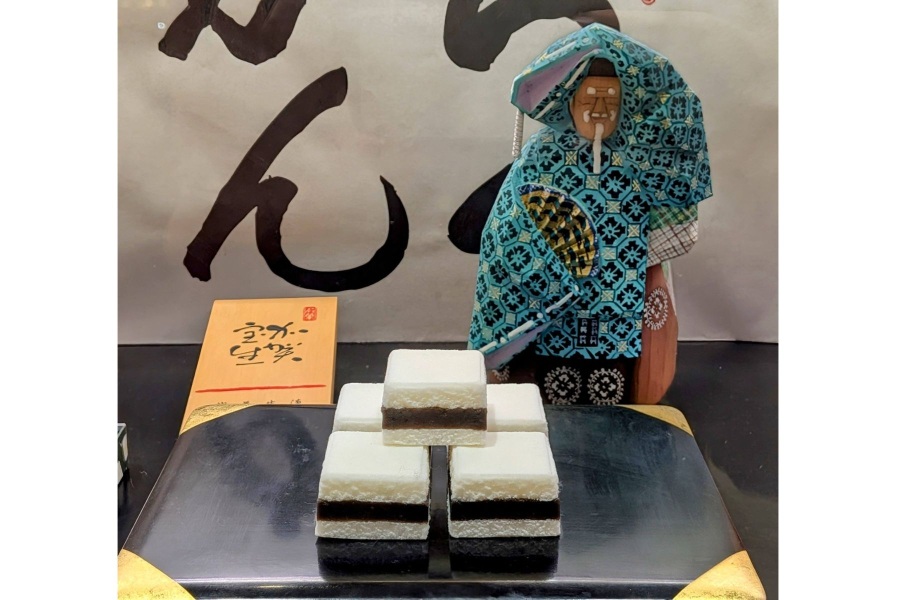
Kaga Hosho – A Traditional Japanese Sweet Named After Noh
In Kanazawa, there is a traditional Japanese confectionery that takes its name from Noh: Kaga Hosho, made by Moroe-ya, a long-established confectionery founded in 1849.
This elegant sweet consists of nama rakugan (soft pressed rice-flour confectionery) layered around a filling of yokan, a traditional sweet bean jelly. Its simple yet striking contrast of white and black evokes the dignified and refined presence of Noh.
Its sophisticated appearance and rich flavor have long made it a favorite among tea connoisseurs and lovers of fine food.
The fact that Kanazawa's Noh culture has left its mark not only on the stage but also on traditional Japanese confectionery is a wonderful example of how deeply traditional culture is woven into everyday life in this city.