Kenrokuen, Kanazawa Castle & 21st Century Museum Half-Day Course (3 Hours)
This walking course begins at Kenrokuen, awarded three stars in the Michelin Green Guide Japan, continues through Kanazawa Castle Park, the former seat of the Maeda clan of the Kaga Domain, and ends at the highly popular 21st Century Museum of Contemporary Art, Kanazawa, whose concept is “a museum like a park, open to the city.”
Get off at “Kenrokuen-shita / Kanazawa Castle (across from Ishikawa Gate)” bus stop.
Kenrokuen Garden
A Beautiful and Famous Garden in the Heart of Kanazawa
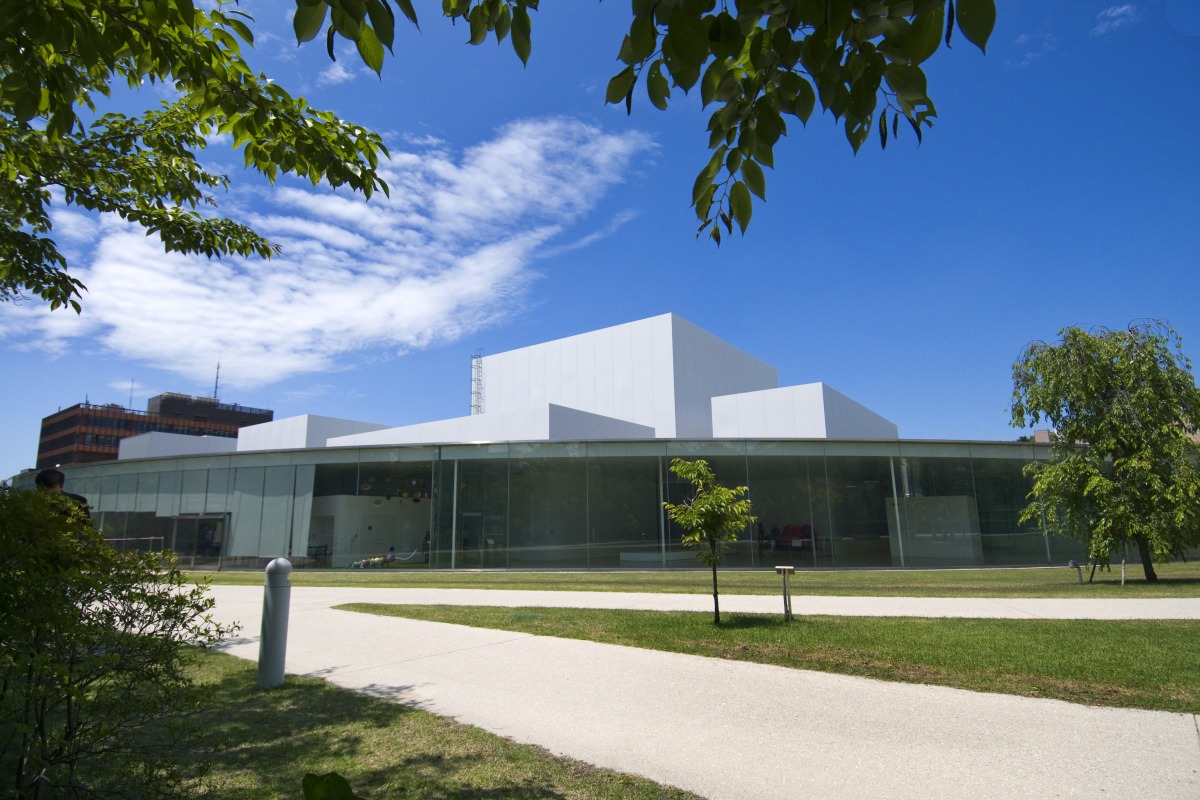
Considered one of Japan’s three most beautiful gardens, Kenrokuen Garden is a must-visit location in Kanazawa. The name Kenrokuen means “having six factors”, representing the attributes which bring out the garden’s stunning beauty: spaciousness, tranquility, artifice, antiquity, water sources and magnificent views.The garden has an area of 11.4 hectares and is located on the heights of the central part of Kanazawa next to Kanazawa Castle. The Maeda family, who ruled the Kaga Domain (the present Ishikawa and Toyama areas) in feudal times, maintained the garden from generation to generation. It is regarded as one of the most beautiful feudal lords' gardens in Japan.
One of Kenrokuen Garden’s most stunning attractions is its large artificial pond called Kasumigaike. Located near the center of the pond is Horai Island. The pond is often seen to symbolize the sea and Horai Island a sacred island out at sea, on which an ageless hermit with miraculous power was believed to live. As a result, the pond and the island were constructed to symbolize long life and eternal prosperity for the lord.
There are many other gorgeous features to enjoy in the garden, including the flowers and trees that grow there, such as plum and cherry blossoms in spring, azaleas and irises early in summer, and colorful red and yellow leaves in autumn.
In Winter, visitors can enjoy the snow-covered landscapes with yukitsuri (which means “snow hanging”). yukitsuri is a traditional technique for protecting the branches of the pine trees in the garden from heavy snow; trees are given support by bamboo poles and rope arranged a captivating conical layout.
Kanazawa Castle Park・Gyokusen'in maru Garden
One of Kanazawa’s key historic landmarks
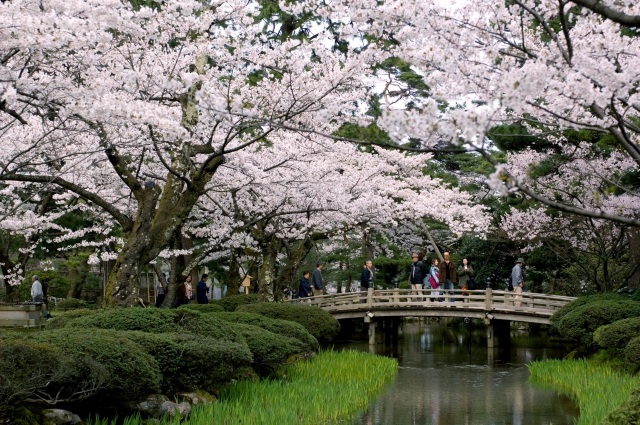
Once the home of the Maeda family, who governed the Kaga Domain – present day Ishikawa and Toyama – for over 280 years, Kanazawa Castle is an essential part of the city’s history.
Many features of the castle including the original castle tower were destroyed in two major fires over its long history, and many of them have been rebuilt. Two of its longest lasting features are the Ishikawa-mon Gate, which was rebuilt in 1788, and the Sanjikken Nagaya which was rebuilt in 1858. Both of them have been designated as important cultural assets.
During the time of the Maeda family, Kanazawa Castle was surrounded by moats and had a fort function with loopholes for matchlocks on the outer wall in order to keep it secure from enemies. The beautiful white tiles that grace the roof are weathered lead and the walls made of white mortar with flat tiles attached to it. The stone walls vary in type throughout the castle and it is apparent that many of them were built in separate periods, with the oldest dating back more than 400 years ago.
Prior to Kanazawa Castle and its park’s restoration, it was used for many different purposes. For a time, it was used as base for the Japanese army and then a campus for Kanazawa University before being designated a National Historic Site in 2008.
Hishi Yagura, Gojikken Nagaya, and Hashizume-mon Tsuzuki Yagura (turret and storehouse)
These three stunning features are reproductions of original aspects of the park from over 125 years ago. Hishiyagura is a diamond-shaped turret, Gojikken Nagaya a 90-yard-long warehouse, and Hashizumemon Tsuzuki Yagura a turret designed to protect a nearby gate. Constructed through traditional methods, they offer a glimpse into Kanazawa’s past.
Gyokusen'inmaru Garden
In 1634, the third lord of the Maeda family started to construct the garden. Although it was destroyed at the end of the feudal period, the garden was reconstructed in 2015. If you visit the garden after sunset on Saturdays and designated dates, you can enjoy a captivating lights show.
Shiinoki Cultural Complex, Ishikawa Prefecture
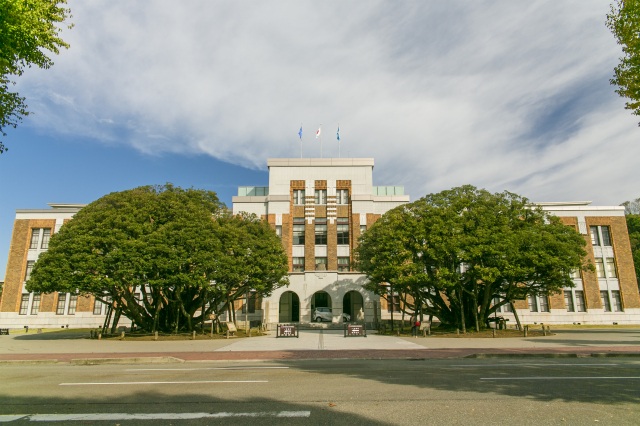
The Shiinoki Cultural Complex, Ishikawa Prefecture, was a part of the previous prefectural government building (constructed in 1924). The front side of the Shiinoki Cultural Complex maintains the original bricks, and the opposite side provides a modern space with glass windows. The facilities harmonized with two acorn trees (estimated to be 300 years old) incorporate an interactive space including a tourist information desk, restaurant and cafe, conference room, and galleries. *English is spoken at the tourist information desk.
Kanazawa Noh Museum
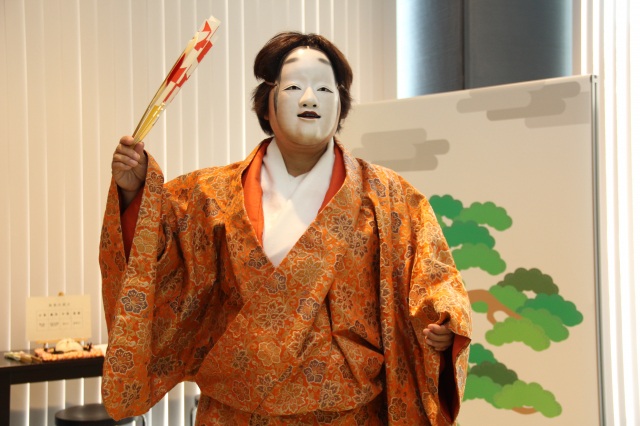
Noh (a major form of classic Japanese musical drama) of the Hosho School has been promoted among people in Kanazawa since the Edo period. Kaga Hosho, which is originated in Kanazawa, tells that Kanazawa is a prosperous ground of Noh Theater. The Kanazawa Noh Museum introduces the structure of Noh Theater with an actual stage reproducing Noh play. Besides, the museum exhibits Kaga Hosho's precious Noh masks and costumes handed down over generations.
21st Century Museum of Contemporary Art, Kanazawa
A hub for contemporary art in Kanazawa
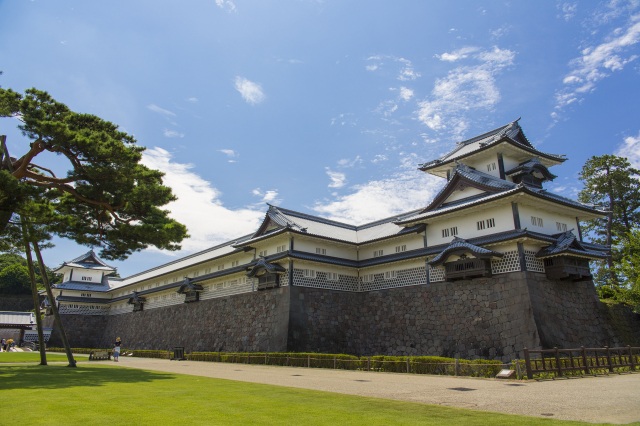
Opened in 2004, the 21st Century Museum of Contemporary Art in Kanazawa stands out compared to more traditional art museums. The museum features a captivating disc-like design, as if it were a UFO touching down in the middle of Kanazawa. All the walls are made of glass and the building features five gates, all pointing towards different parts of the city.
The museum exhibits experimental contemporary art that visitors can touch or sit on and is perfect for children and adults alike. Some of museum’s highlights include commissioned works, which are integrated into the building’s unique design.
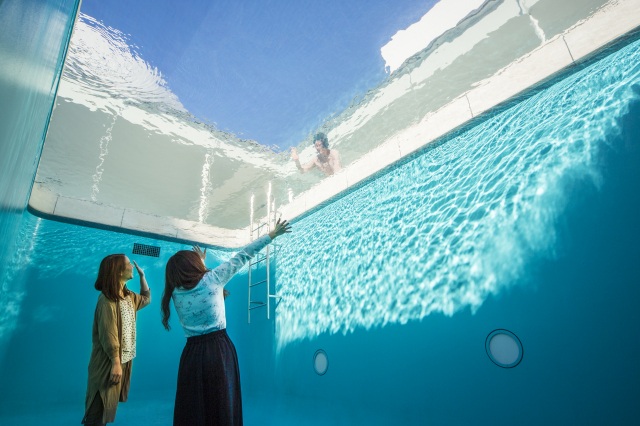
The 21st Century Museum of Contemporary Art excels at offering visitors unique experiences that can’t be found anywhere else. Highlights include Leandro Erlich's The Swimming Pool, which enables visitors to feel as if they’re standing at the bottom of a swimming pool, and a wall decorated with flowers gathered from the suburbs of Kanazawa.
Additionally, the museum's shop offers a wide variety of products, such as museum memorabilia, accessories, and selected goods.