Kaga Domain MAEDA Clan Historic Sites Tour (5 Hours)
This course traces the prosperity of the Kaga Domain (worth one million koku) by visiting sites connected to the Maeda clan — beginning with Oyama Shrine, dedicated to MAEDA Toshiie and his wife Matsu, and continuing through Kanazawa Castle, Kenrokuen Garden, Seisonkaku Villa, and the Maeda clan cemetery.
Get off at “Minami-cho・Oyama Shrine” bus stop.
Oyama Shrine
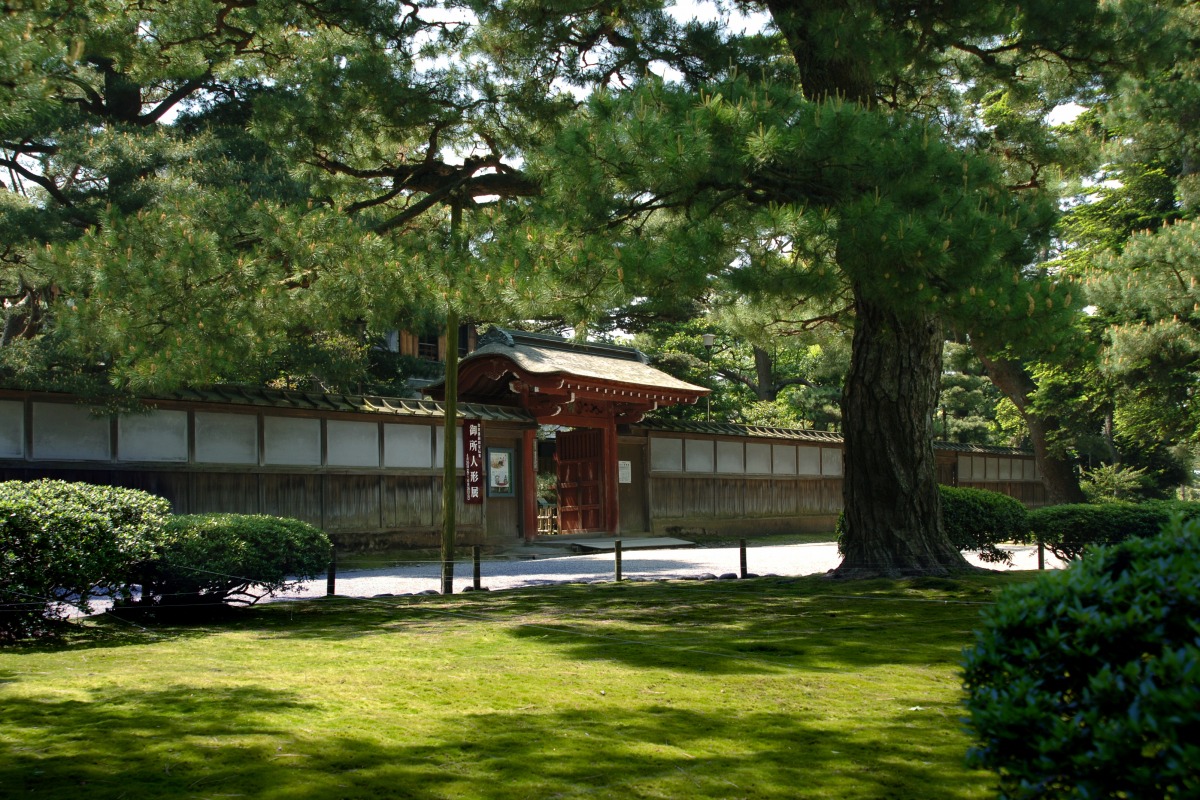
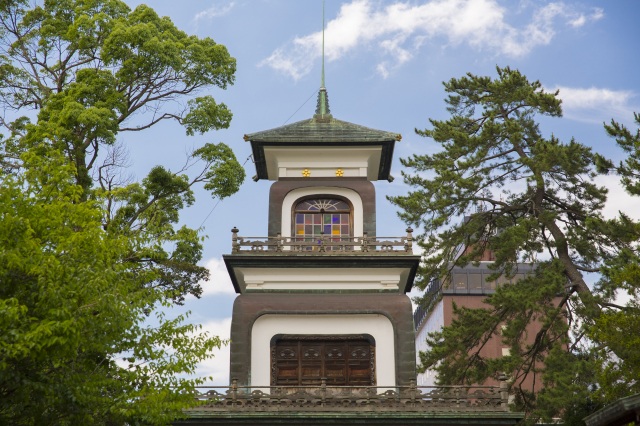
The "Shinmon" gate, which shows the Guillaman, is stunningly beautiful!
The shrine that enshrines Maeda Toshiie was moved to the present location in 1873. The main gate is a peculiar mix of traditional Japanese, Chinese, and European religious architectural elements. This gate, which was designated as Japan's important cultural assets, was completed in 1875.
One of the highlights of Oyama Shrine is the garden in round-the-pond style with an artificial island and bridge in the images of old musical instruments, such as the biwa (Japanese short-necked fretted lute).
It is illuminated from after sunset until 22:00 at night, and the way it floats in the light creates a fantastic atmosphere. Located between Kenrokuen Garden and Kanazawa Castle and the Nagamachi District and downtown area, it is an easy stopover during sightseeing.
Nezumitamon Gate and Bridge
Gate and bridge reconstructed after 140 years
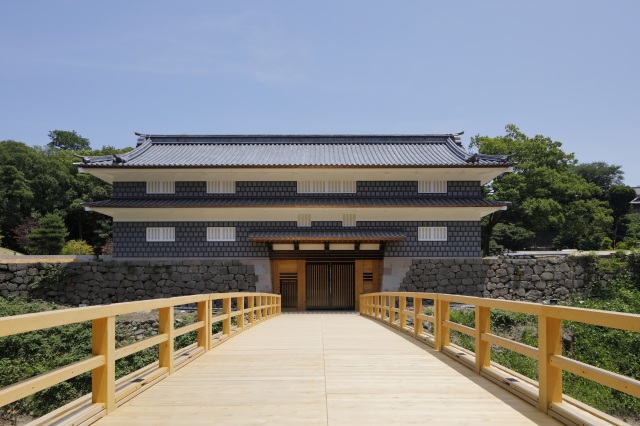
Connecting Oyama Jinja Shrine and Kanazawa Castle is the Nezumitamon Gate which opened its doors in 2020. The history of this bridge dates back to the early 17th century. In 2015 the reconstruction of Nezumitamon Bridge and Gate was confirmed in the Third Kanazawa Castle Park Development Project. In 1877 the Nezumitamon Bridge was demolished due to age and wear, and in 1884, a fire destroyed the gate. Both were reconstructed using historical records and today we can enjoy the beauty of the gate as it was 400 years ago.
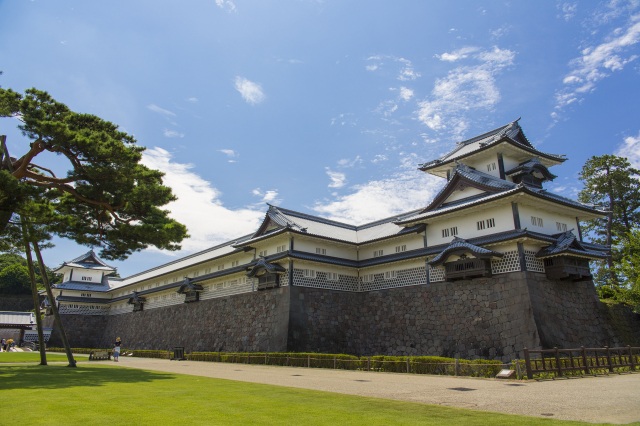
Kanazawa Castle Park & Gyokusen❜inmaru Garden
One of Kanazawa’s key historic landmarks
Once the home of the Maeda family, who governed the Kaga Domain – present day Ishikawa and Toyama – for over 280 years, Kanazawa Castle is an essential part of the city’s history.
Many features of the castle including the original castle tower were destroyed in two major fires over its long history, and many of them have been rebuilt. Two of its longest lasting features are the Ishikawa-mon Gate, which was rebuilt in 1788, and the Sanjikken Nagaya which was rebuilt in 1858. Both of them have been designated as important cultural assets.
During the time of the Maeda family, Kanazawa Castle was surrounded by moats and had a fort function with loopholes for matchlocks on the outer wall in order to keep it secure from enemies. The beautiful white tiles that grace the roof are weathered lead and the walls made of white mortar with flat tiles attached to it. The stone walls vary in type throughout the castle and it is apparent that many of them were built in separate periods, with the oldest dating back more than 400 years ago.
Prior to Kanazawa Castle and its park’s restoration, it was used for many different purposes. For a time, it was used as base for the Japanese army and then a campus for Kanazawa University before being designated a National Historic Site in 2008.
Hishi Yagura, Gojikken Nagaya, and Hashizume-mon Tsuzuki Yagura (turret and storehouse)
These three stunning features are reproductions of original aspects of the park from over 125 years ago. Hishiyagura is a diamond-shaped turret, Gojikken Nagaya a 90-yard-long warehouse, and Hashizumemon Tsuzuki Yagura a turret designed to protect a nearby gate. Constructed through traditional methods, they offer a glimpse into Kanazawa’s past.
Gyokusen'inmaru Garden
In 1634, the third lord of the Maeda family started to construct the garden. Although it was destroyed at the end of the feudal period, the garden was reconstructed in 2015. If you visit the garden after sunset on Saturdays and designated dates, you can enjoy a captivating lights show.
Kenrokuen Garden
A Beautiful and Famous Garden in the Heart of Kanazawa
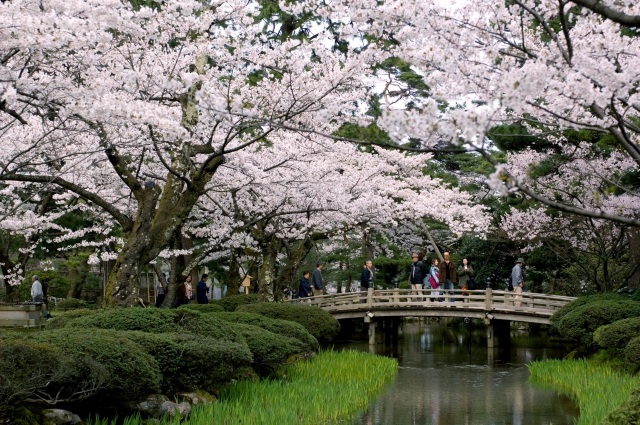
Considered one of Japan’s three most beautiful gardens, Kenrokuen Garden is a must-visit location in Kanazawa. The name Kenrokuen means “having six factors”, representing the attributes which bring out the garden’s stunning beauty: spaciousness, tranquility, artifice, antiquity, water sources and magnificent views.The garden has an area of 11.4 hectares and is located on the heights of the central part of Kanazawa next to Kanazawa Castle. The Maeda family, who ruled the Kaga Domain (the present Ishikawa and Toyama areas) in feudal times, maintained the garden from generation to generation. It is regarded as one of the most beautiful feudal lords' gardens in Japan.
One of Kenrokuen Garden’s most stunning attractions is its large artificial pond called Kasumigaike. Located near the center of the pond is Horai Island. The pond is often seen to symbolize the sea and Horai Island a sacred island out at sea, on which an ageless hermit with miraculous power was believed to live. As a result, the pond and the island were constructed to symbolize long life and eternal prosperity for the lord.
There are many other gorgeous features to enjoy in the garden, including the flowers and trees that grow there, such as plum and cherry blossoms in spring, azaleas and irises early in summer, and colorful red and yellow leaves in autumn.
In Winter, visitors can enjoy the snow-covered landscapes with yukitsuri (which means “snow hanging”). yukitsuri is a traditional technique for protecting the branches of the pine trees in the garden from heavy snow; trees are given support by bamboo poles and rope arranged a captivating conical layout.
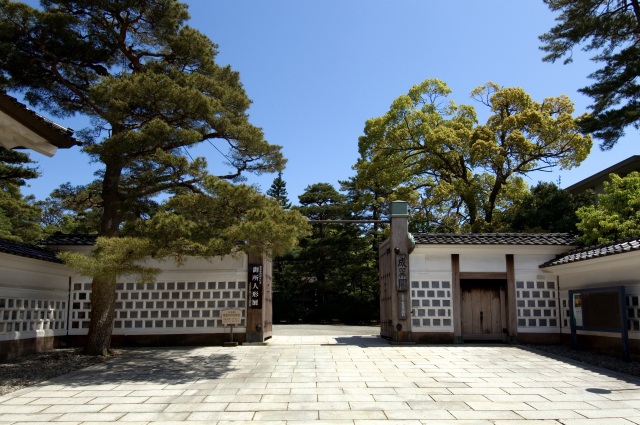
Seisonkaku Villa
An exquisite mansion gifted to the lord's mother
Seisonkaku is a villa that the 13th lord of the Maeda family built for his mother in Kenrokuen Garden in 1863. Fine techniques in a wide variety are used for the inner pillars and walls of Seisonkaku. These techniques include a wooden panel with openwork carvings of flowers and birds and a coffered ceiling for the guest chamber called "Ekken-no-ma." From these, visitors will know the status of the then Maeda family.
Furthermore, Seisonkaku exhibits articles with a long and distinguished history, such as dolls for the Japanese Girls' Festival and furniture.
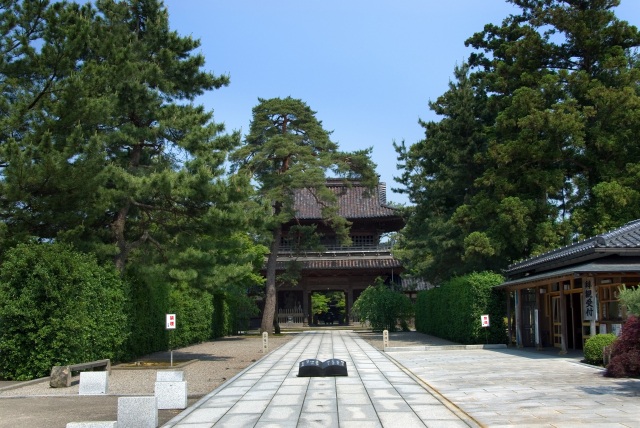
Get off at “Tentokuin-mae”
Tentokuin Temple
For prayers for a good marriage and family happiness, go to Tentokuin, the family temple of princess Tamahime.
Princess Tamahime, who united the Tokugawa and Maeda families and contributed to the prosperity of the Kaga clan, is enshrined at Tentokuin as a symbol of good marriage and family happiness.
Children, the fruit of the love between Princess Tamahime and Toshitsune, who had no concubines, contributed to the Maeda family and its development in various parts of Japan.
At Tentokuin, a karakuri doll “Tale of Princess Tamahime/Tentokuin” (approx. 15 min.) and a karakuri doll DVD (approx. 15 min.) depicting the life of Princess Tamahime are performed,
The “Otori-ishi,” a stone that visitors receive for their own good fortune, and the “Tamahime Kinpaku Goshuin,” a red seal decorated with gold leaf, a specialty of Kanazawa, and the Maeda family crest, are gifts that can only be received here.
These are gifts that can only be received here.
There are also many other attractions, such as a matcha tea ceremony experience with a view of the dry landscape garden, and a “sutra copying experience” in a solemn atmosphere as the temple has long been a highly ranked ascetic monastery.
Nodayama Cemetery(Maeda Clan Cemetery)
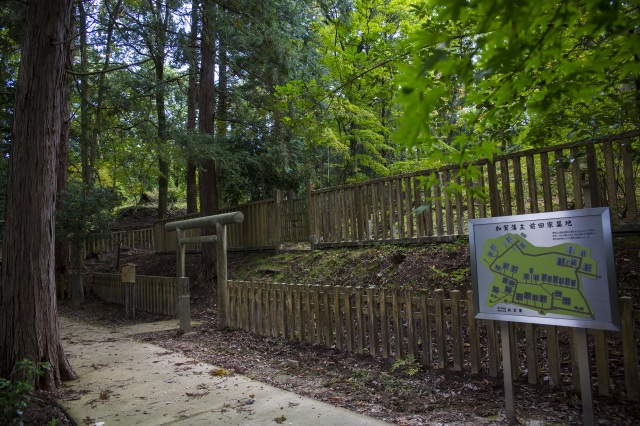
Nodayama is a hilly area located in the southeast part of the city of Kanazawa. The elder brother of Lord Maeda Toshiie, founder of the Kaga Domain, was buried here at the end of the 16th century. After that, the graves of the family for generations including Maeda Toshiie were made around the summit, and their vassals and townspeople's graves were made in the lower part. Now, the area is a large cemetery that has approximately 50,000 gravestones.
A large number of people visit the cemetery during the Bon Festival (around July 15 or August 15) and equinoctial weeks (around March 20 and September 23) every year.